

In an era of global integration, English is no longer merely a competitive advantage; it has become an essential requirement for survival in the labor market. Amid a flood of enticing advertisements that prey on learners’ impatience, such as “Become fluent in 30 days” or “Transform your English in just three months,” many people end up disappointed and give up when they realize that reality is far less rosy.
Determining exactly how long it takes for an individual to listen, speak, and respond fluently is a complex scientific question. It depends largely on how “being able to communicate” is defined, as well as the actual number of hours each person spends learning and practicing.
Leading educational and language assessment organizations around the world generally do not measure language-learning progress simply in months or years. Instead, they convert it into the number of focused, guided learning hours. Based on the Common European Framework of Reference for Languages (CEFR), research from Cambridge Assessment English outlines a demanding timeline for progressing through different proficiency levels.
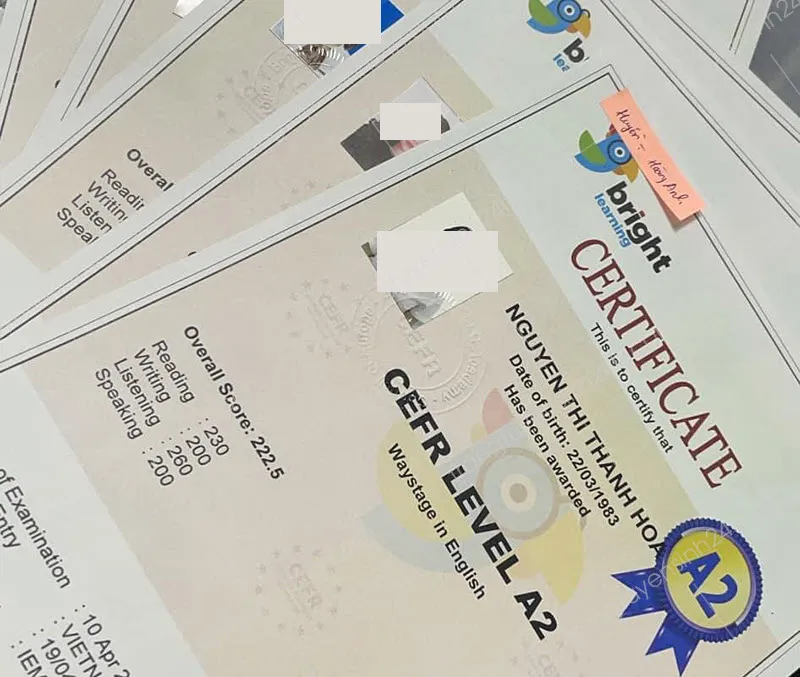
Specifically, a learner starting from scratch, essentially having no prior foundation, needs an average of 90 to 100 hours of study to reach A1, and a cumulative total of 180 to 200 hours to reach A2, a level at which they can understand and produce simple sentences about themselves and their families. To advance to B1, considered the level of basic independent communication, where learners can handle most situations that arise while traveling or engaging in everyday conversations, they need to accumulate approximately 350 to 400 hours of serious study.
The difference in learning time becomes even more pronounced when the goal is raised to professional, fluent communication in academic or workplace environments, corresponding to B2 and C1. Real-world research data from EF (Education First) indicates that moving from B1 to B2 requires at least another 200 hours of intensive study, followed by an additional 200 hours to reach C1, the level at which an individual can confidently discuss and debate complex economic and social issues. In other words, the average time required for someone to progress from knowing virtually nothing to becoming proficient in English ranges from 1,000 to 1,200 hours of study.
Consider a realistic calculation: a busy working professional who commits exactly one hour a day to focused study would need approximately one year to reach basic communication proficiency (B1) and between three and three and a half years of continuous, uninterrupted learning to speak English fluently and respond naturally.
One of the most critical mistakes that causes millions of Vietnamese learners to study English for years, sometimes from secondary school all the way through university, yet still struggle with the inability to speak or understand the language is the failure to distinguish between “time enrolled” and “actual accumulated learning time.” Enrolling in a six-month course at a language center, with two 90-minute classes per week, does not mean that a learner has actually spent six months learning English. In reality, the total amount of time they spend actively interacting with the language over those six months is less than 72 hours, a figure that is not even enough to move them beyond the A1 beginner level.
Furthermore, spreading study time too thinly and failing to maintain consistency can cause knowledge to fade. The brain gradually forgets previously learned material, meaning that each new lesson must spend valuable time reviewing what was forgotten from the previous one. As a result, the journey toward mastering the language becomes a frustrating cycle with no clear end.
More importantly, communication ability is largely determined by receptive competence, particularly listening, before learners can effectively produce spoken language. Data cited by VnExpress indicates that a learner may need at least 300 to 500 hours of active, highly focused listening practice to understand the rhythm, intonation, and pronunciation variations used by native speakers in everyday conversations. Learners’ ears need sufficient time to adapt to English features such as final sounds, connected speech, and sound reductions. Without going through this stage of building an auditory filter, learners can fall into the trap of “one-way communication”: they may manage to produce sentences they have prepared in advance, but become completely unable to respond when the other person speaks back, causing the conversation to quickly break down.