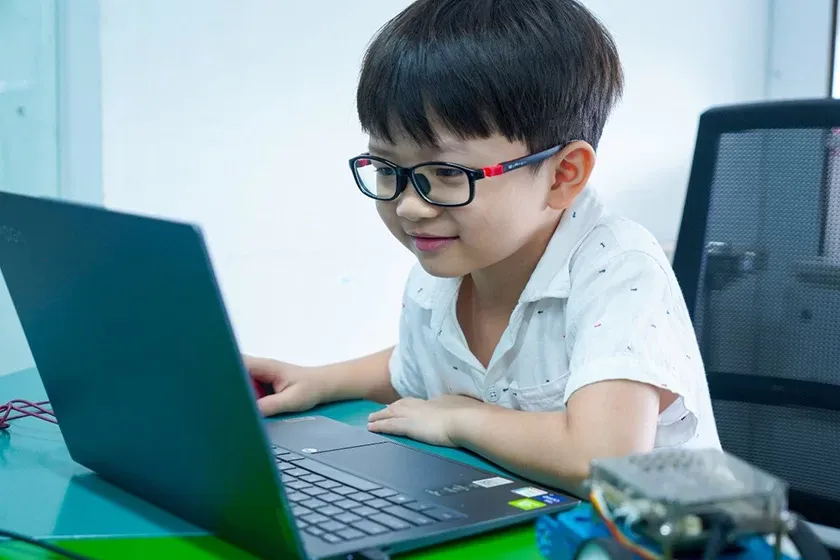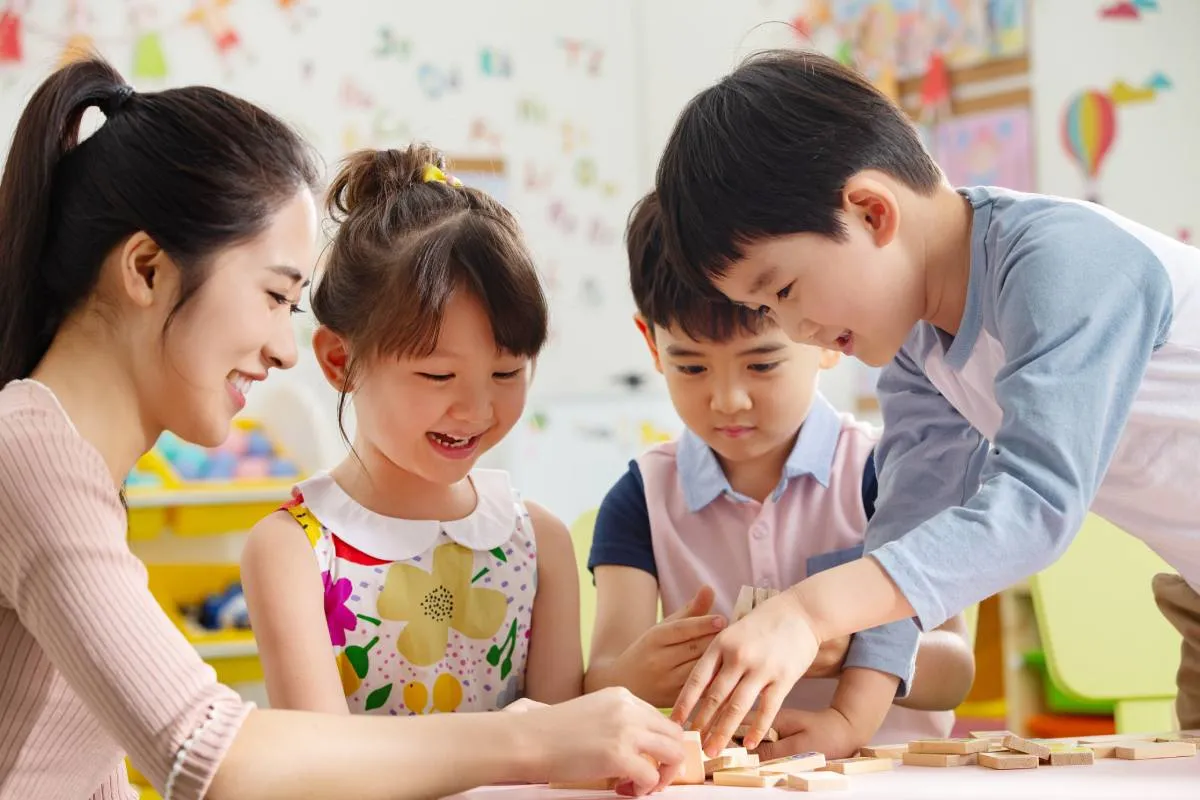

Many parents feel worried or frustrated when they see their children happily spending hours tinkering with Lego bricks, taking apart a battery-powered toy car just to see what's inside, or secretly collecting old cardboard boxes and plastic bottles to "build" an unusual robot.
Rather than viewing these activities as mischief that creates a mess at home or damages belongings, modern educators see them from a completely different perspective. These are some of the earliest, clearest, and most vivid signs that a child may have natural aptitudes well suited to STEM education, an integrated educational approach covering four core fields: Science, Technology, Engineering, and Mathematics.
STEM is not about dry mathematical theorems or abstract physics formulas sitting motionless on a page. Instead, it involves applying knowledge across multiple disciplines to solve real-world problems. When a child assembles a model by hand using small components, they are doing more than simply playing. They are effectively participating in a miniature engineering process. This requires the brain to perform spatial reasoning, calculate gravitational balance, select suitable materials, and continually experiment to find the optimal solution. This is a vivid example of the engineering design process, a core component of STEM education that encourages logical thinking and systematic problem-solving.

Similarly, the desire to explore and dismantle objects, a behavior often mistaken for mischief, is actually an expression of a curious scientific mind. Children want to understand how the world around them works. They want to know why a wheel can turn, why a light can shine, and what happens when the internal structure of a system changes. This curiosity is the fundamental driving force behind the breakthroughs achieved by scientists and inventors. By taking objects apart and reconstructing them, children learn to analyze systems, recognize cause-and-effect relationships, and develop critical thinking skills.
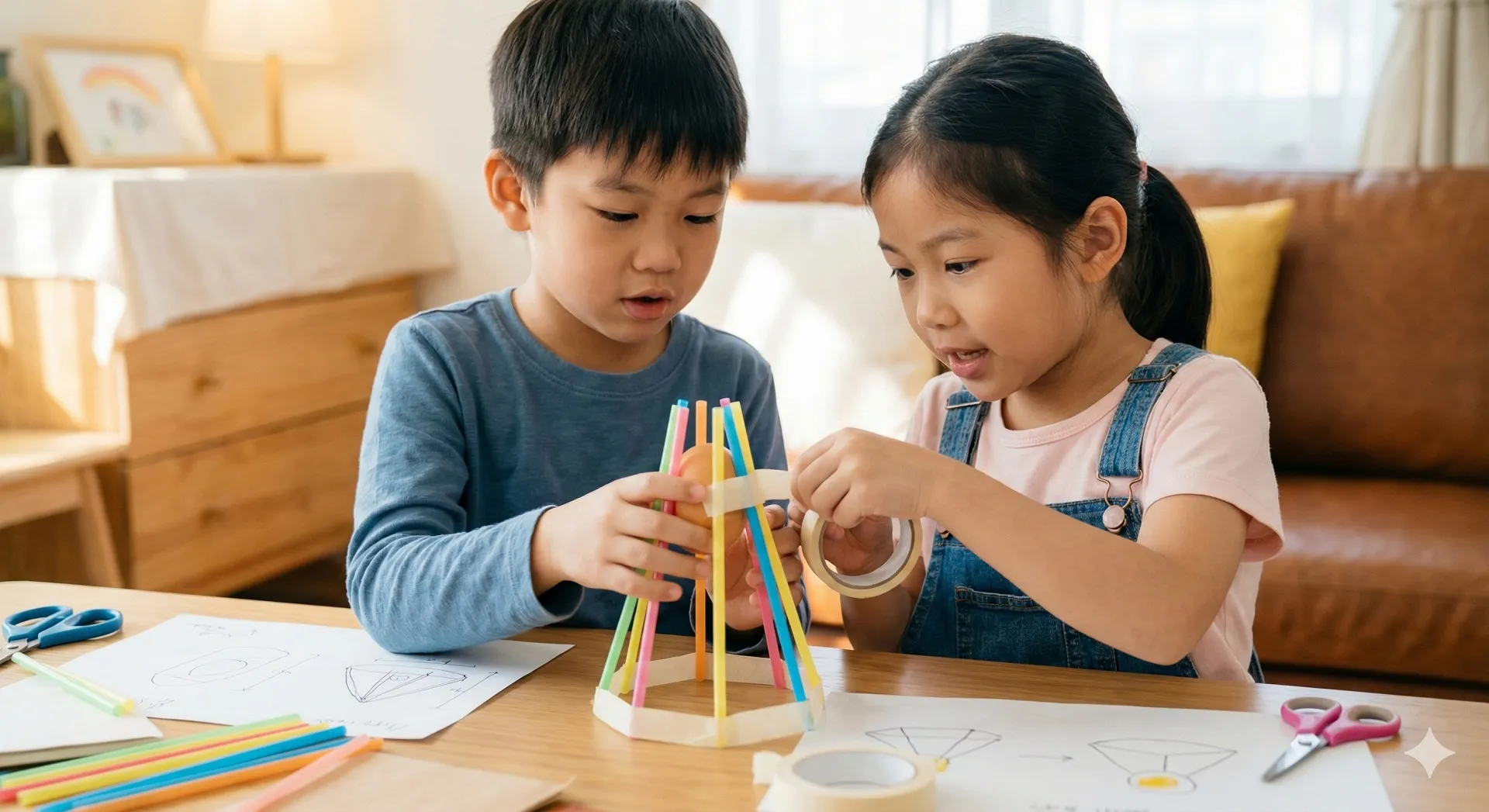
A passion for building things from readily available materials also reflects boundless creativity and flexible thinking. These qualities help children avoid being confined to established patterns and encourage them to seek fresh perspectives and new approaches.
Building and construction toys are excellent tools for developing children's spatial intelligence. Spatial intelligence is the ability to mentally visualize, manipulate, and recreate objects in three-dimensional space. Numerous studies in education and psychology have shown that children who regularly play with building blocks tend to perform significantly better on later tests of mathematics and spatial reasoning. When they look at a two-dimensional design drawing and attempt to turn it into a stable three-dimensional model, their brains must work intensively to process concepts such as proportion, geometry, symmetry, and hand-eye coordination.
Furthermore, genuine engineering skills begin to develop when children move beyond following pre-existing instructions and start creating their own models. At this stage, they encounter technical failures, such as models collapsing because their centers of gravity are off balance, joints failing to fit because of dimensional inaccuracies, or structures lacking the strength to withstand applied forces. Rather than giving up, their enthusiasm motivates them to identify the causes, adjust their designs, and test them again from the beginning. This continuous process of trial and error not only builds advanced engineering thinking and risk-management skills but also teaches children perseverance and the ability to face challenges with determination.
When children begin collecting seemingly disposable items, such as toilet paper rolls, bottle caps, rubber bands, and milk cartons, to create new toys, their creative design thinking is beginning to take shape.
Unlike expensive, mass-produced toys that already have clearly defined functions, building with recycled materials forces children to recognize new possibilities in old objects. They must ask themselves how a cardboard box could become a boat's hull or how a rubber band could serve as the propulsion mechanism for a homemade car. These activities lay the foundation for innovation, the ability to optimize available resources, and the sustainable thinking that plays an increasingly important role in modern industrial design.
Design thinking is also closely linked to understanding people's needs and finding practical solutions. For example, a child might create a homemade litter-grabbing tool to help their grandmother avoid bending over while gardening, or make a multi-compartment pencil holder to keep their study area organized. When the act of building is driven by the goal of solving a specific problem, children are practicing human-centered design thinking.
To help parents develop a systematic and scientific understanding, their children's everyday "mischievous" behaviors can be examined in terms of the core competencies emphasized in STEM education.
• Systems analysis: Children who enjoy taking objects apart to explore their internal structures are actually learning how an entire system operates through its individual components. They begin to recognize cause-and-effect relationships: one gear turns and affects the wheel axle, or electricity from a battery must pass through a switch for a light bulb to illuminate.
• Visual mathematical thinking: Without having to solve dry problems on paper, children are already applying mathematics when they calculate how many blocks are needed to build a symmetrical tower that will not collapse. They are intuitively, yet remarkably accurately, applying spatial geometry and estimating weight distribution and center of gravity.
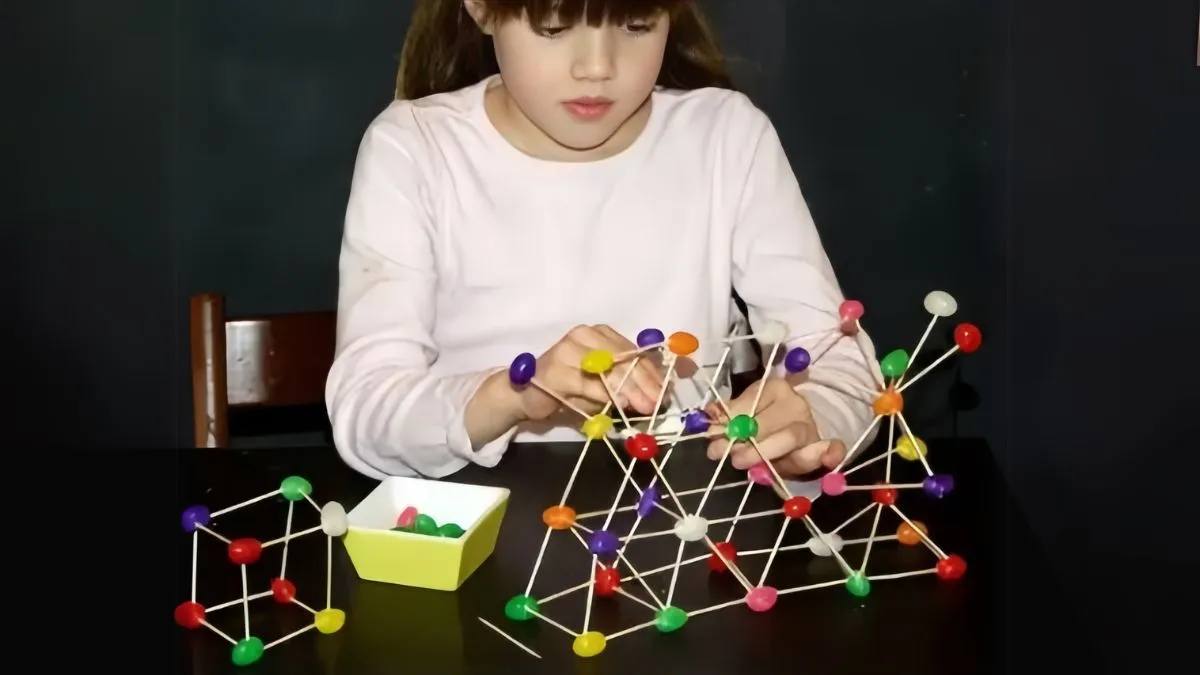
• Failure management: In the world of STEM, no product is perfect from the very first version. When a child's construction collapses, the moment they quietly pick up each piece, think about what went wrong, and begin again is precisely when flexible thinking and perseverance are being naturally strengthened.