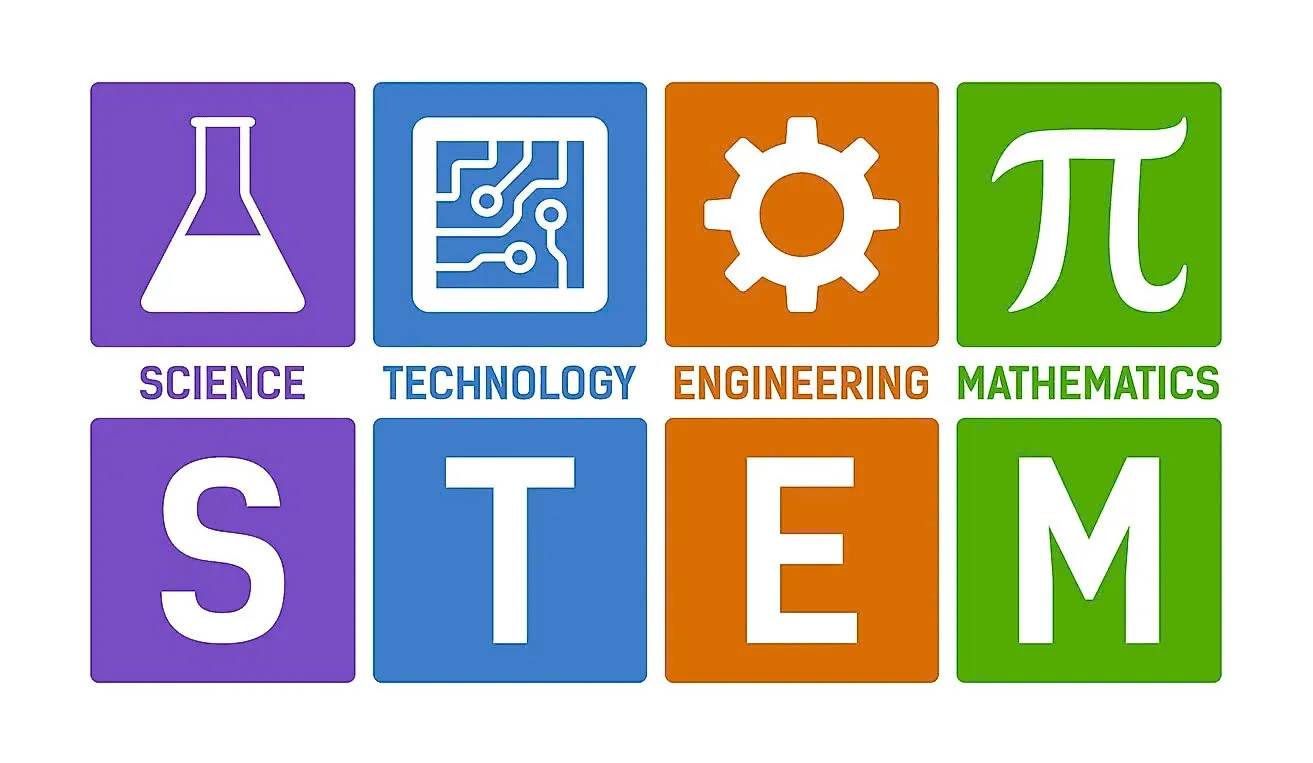

In the context of a rapidly changing world driven by the Fourth Industrial Revolution, traditional education with rote memorization is gradually giving way to highly applied learning methods. The most prominent among them is STEM education - an acronym for Science, Technology, Engineering, and Mathematics. However, STEM is not simply teaching these four subjects in isolation. It is an interdisciplinary educational philosophy that helps learners break down the wall between textbook theory and real life. The focus of STEM is not merely on acquiring knowledge, but at its core, it is the cultivation and development of a comprehensive skill system, helping students be ready to face a volatile future.
STEM education is designed to equip students with a set of “21st Century Skills”. The skills students can learn from STEM include:
· Critical Thinking and Problem Solving: In a STEM classroom, students rarely receive ready-made answers. Instead, they are assigned a real-world problem (e.g., how to filter muddy water into clean water, how to make a bridge withstand a heavy load). Through this, students must self-analyze the causes, ask questions, form hypotheses, and test various ways to find the optimal solution.
· Creativity and Innovation Skills: Contrary to the misconception that science is dry and rigid, STEM demands extremely high creativity. When facing a technical problem, there are no limits for students to combine materials, algorithms, or new technologies to create a unique product bearing their personal mark.
· Teamwork and Communication Skills: STEM projects are often too large and complex for an individual to complete excellently. Students are forced to work in teams, dividing tasks according to each person's strengths (the programmer, the assembler, the presenter). They learn how to listen, respectfully critique their peers' ideas, and present their own ideas coherently.
· Technological and Information Literacy: Being born in the digital age is one thing, but understanding and controlling technology is a different story. STEM helps students use technology as a tool for creation (writing code, 3D design, robot programming) rather than just being passive content consumers.
· Adaptability and Resilience: Doing STEM means getting used to failure. A buggy piece of code or a collapsed physical model is an everyday occurrence. Students learn not to give up, treating failure as important data to adjust and try again until successful.
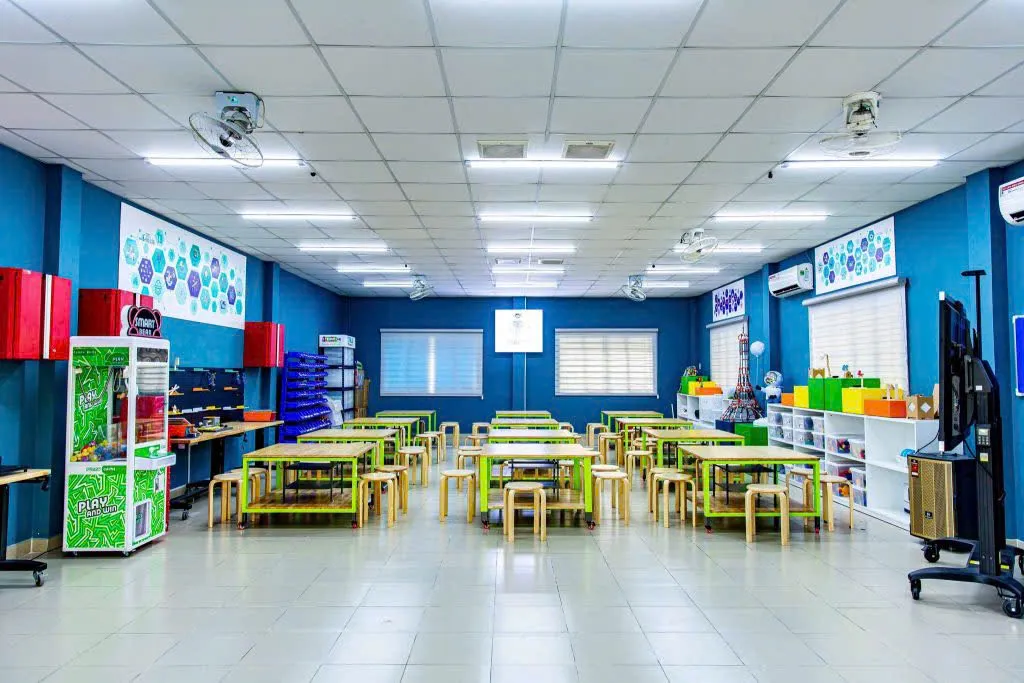
To hone the above skills, the approach in STEM education is completely different from the traditional classroom:
Project-based learning: The learning process does not begin with theory but with an open-ended question or challenge. Students will undergo a long-term research process, applying knowledge from multiple subjects to design, build, and launch a practical “product” at the end of the term.
Hands-on experiential learning: “Learning goes hand in hand with doing” is the motto of STEM. Students directly touch materials, using saws, hammers, electronic circuit boards, or computers to actualize their ideas with their own hands instead of just watching the teacher demonstrate.
Inquiry-based learning: Teachers in the STEM classroom step back, acting as facilitators rather than knowledge transmitters. When students get stuck, the teacher will not provide the answer immediately but will ask guiding questions to stimulate them to think for themselves and find a way out.
Absorbing knowledge through the STEM method brings immense value to learners:
· Solid preparation for future careers: According to global economic reports, STEM-related occupational groups have the fastest growth rate and highest income levels. Even if students do not become engineers or scientists later on, the skill set of thinking and problem-solving from STEM will still help them shine in any field.
· Connecting textbook theory with reality: Students no longer have to ask “What is learning Math for?” when they manually use geometric and algebraic formulas to calculate the flight trajectory of a water rocket. Knowledge becomes more vibrant and meaningful than ever before.
· Fostering self-confidence and a passion for learning: The feeling of pride when completing a functional product will ignite a passion for learning. Students gradually break down the fear of being wrong, becoming more confident in their own cognitive abilities.
Viewed comprehensively, STEM education is not merely an academic trend but a necessary upgrade of the education system to meet the demands of the new era. It shifts the focus from “what students know” to “what students can do with what they know”. By integrating the four core areas and applying active learning methods such as project-based and hands-on learning, STEM creates an ecosystem that nurtures the most crucial skills: critical thinking, creativity, a collaborative spirit, and perseverance.