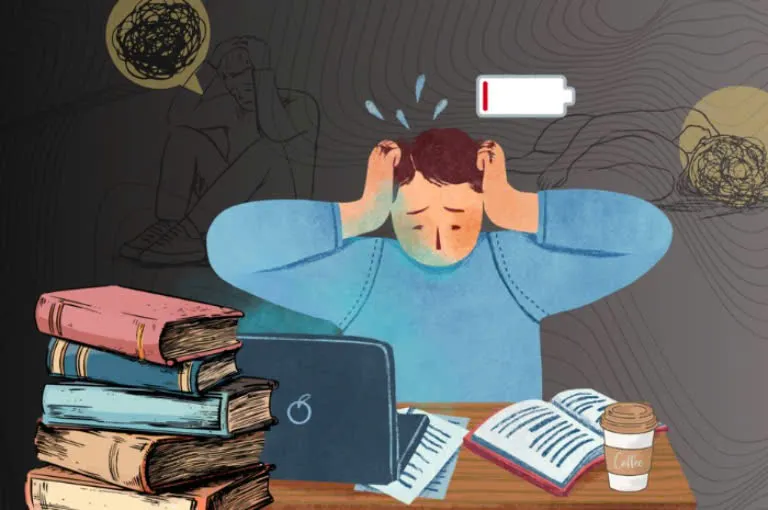

To survive and preserve their sense of self amidst this ruthless grind, modern workers are forced to learn how to "conserve energy" as a core survival skill, rather than viewing it as a luxurious privilege.
Workplace mental health is sounding a red alert on a global scale as the limits of human endurance are severely challenged.
According to Gallup's State of the Global Workplace report, up to 44% of workers worldwide admit to experiencing extreme daily stress right at their workplace. This startling figure exposes the reality that current workplace culture is operating like a machine that erodes employees' psychological health. The consequences of this wave of exhaustion do not stop at individual sighs of helplessness but deliver a heavy, direct blow to the macroeconomic landscape. The costs businesses must pay for declining productivity, operational errors, and the wave of resignations stemming from personnel's psychological instability have escalated to billions of dollars annually, proving that exploiting employee energy is a fundamentally failed business equation. Workplace burnout does not originate solely from workload, but from the disruption of deep focus caused by digital devices.
The root of this cognitive exhaustion lies in an invisible trap called continuously fragmented attention. This is a psychological state that occurs when people constantly put their brains in high-alert mode, ready to be interrupted by rushed message notifications from internal communication software. Behavioral scientists have pointed out a brutal truth: the human brain needs an average of 23 minutes just to return to a state of deep focus after every single distraction from a passing notification. The fact that we pride ourselves on multitasking, simultaneously writing reports and constantly answering messages, is essentially cognitive suicide. This toxic habit temporarily reduces a person's working IQ by 10 points, a severe decline equivalent to the detrimental effects of a completely sleepless night, turning us into low-productivity workers wrapped in a facade of busyness.
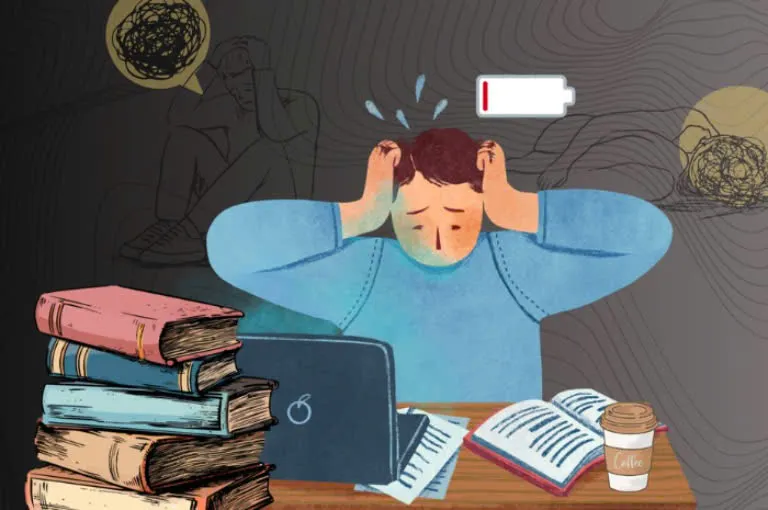
Faced with the risk of being crushed by digital pressure, modTo survive and preserve their sense of self amidst this ruthless grind, modern workers are forced to learn how to "conserve energy" as a core survival skill, rather than viewing it as a luxurious privilege.
Workplace mental health is sounding a red alert on a global scale as the limits of human endurance are severely challenged.
According to Gallup's State of the Global Workplace report, up to 44% of workers worldwide admit to experiencing extreme daily stress right at their workplace. This startling figure exposes the reality that current workplace culture is operating like a machine that erodes employees' psychological health. The consequences of this wave of exhaustion do not stop at individual sighs of helplessness but deliver a heavy, direct blow to the macroeconomic landscape. The costs businesses must pay for declining productivity, operational errors, and the wave of resignations stemming from personnel's psychological instability have escalated to billions of dollars annually, proving that exploiting employee energy is a fundamentally failed business equation. Workplace burnout does not originate solely from workload, but from the disruption of deep focus caused by digital devices.
The root of this cognitive exhaustion lies in an invisible trap called continuously fragmented attention. This is a psychological state that occurs when people constantly put their brains in high-alert mode, ready to be interrupted by rushed message notifications from internal communication software. Behavioral scientists have pointed out a brutal truth: the human brain needs an average of 23 minutes just to return to a state of deep focus after every single distraction from a passing notification. The fact that we pride ourselves on multitasking, simultaneously writing reports and constantly answering messages, is essentially cognitive suicide. This toxic habit temporarily reduces a person's working IQ by 10 points, a severe decline equivalent to the detrimental effects of a completely sleepless night, turning us into low-productivity workers wrapped in a facade of busyness.
ern workers are no longer resigning themselves to it but have begun to activate powerful defense mechanisms to protect their personal energy flow. The rise of the "quiet quitting" trend or the resolute establishment of digital boundaries are highly rational rebellions against the invasion of work into private life. The new-era workforce is bravely starting to refuse answering work messages after office hours, viewing it as a sacred time for neurological energy recovery. At the same time, they proactively apply the method of dividing the workday into static time blocks, locking in a fixed period for critical tasks and turning off all notifications, to forge a solid shield that protects their cognitive energy from the onslaught of the online world.