
Getting 8 Hours of Sleep - The Foundation of Physical and Mental Health
For a very long time, sleep has been considered an essential life need for humans, on par with eating and breathing. Yet, in the rhythm of modern life, many people dismiss the importance of getting enough sleep. Depending on each individual's living conditions, a fast-paced life forces them to spend a lot of time on work and study; with looming deadlines pressing hard, they have to work late into the night to complete tasks on time. Others stay up late just to unwind after a hard day's work, comforting themselves with thoughts like "sleeping a bit late won't hurt," or "tomorrow is a day off, I'll sleep in to make up for it," and so on. However, medicine and science constantly advise that an adult should get about eight hours of sleep per day to ensure both physical and mental health. So why eight hours? Why not six, seven, or nine hours? And just how important is getting enough sleep?
According to numerous scientific studies on neurophysiology and the human biological clock, sleep is not merely a state of rest, but also a process of self-recovery for the body. During sleep, the brain reorganizes information, muscles regenerate, hormones are regulated, and the immune system operates more vigorously. Major health organizations, such as the World Health Organization and the National Sleep Foundation, all agree that adults should sleep an average of seven to nine hours per night, with eight hours considered the ideal window that suits most human bodies.
The number "eight hours" is actually not a rigid, absolute rule; rather, it stems from the natural cycle of sleep. Sleep researcher Nathaniel Kleitman and his student Eugene Aserinsky discovered that human sleep occurs in repeating cycles of about ninety minutes, including light sleep, deep sleep, and REM (Rapid Eye Movement) - the stage where the brain processes memories and emotions. On average, a full night's sleep of eight hours helps the body go through about five complete cycles. To model the periodic changes between these sleep states, a mathematical sine wave is often used, as it is a common graph representation for phenomena with regular oscillations in nature. When the wave moves downward, the body enters deep sleep to restore energy, whereas when the wave moves upward, it transitions into light sleep or REM.
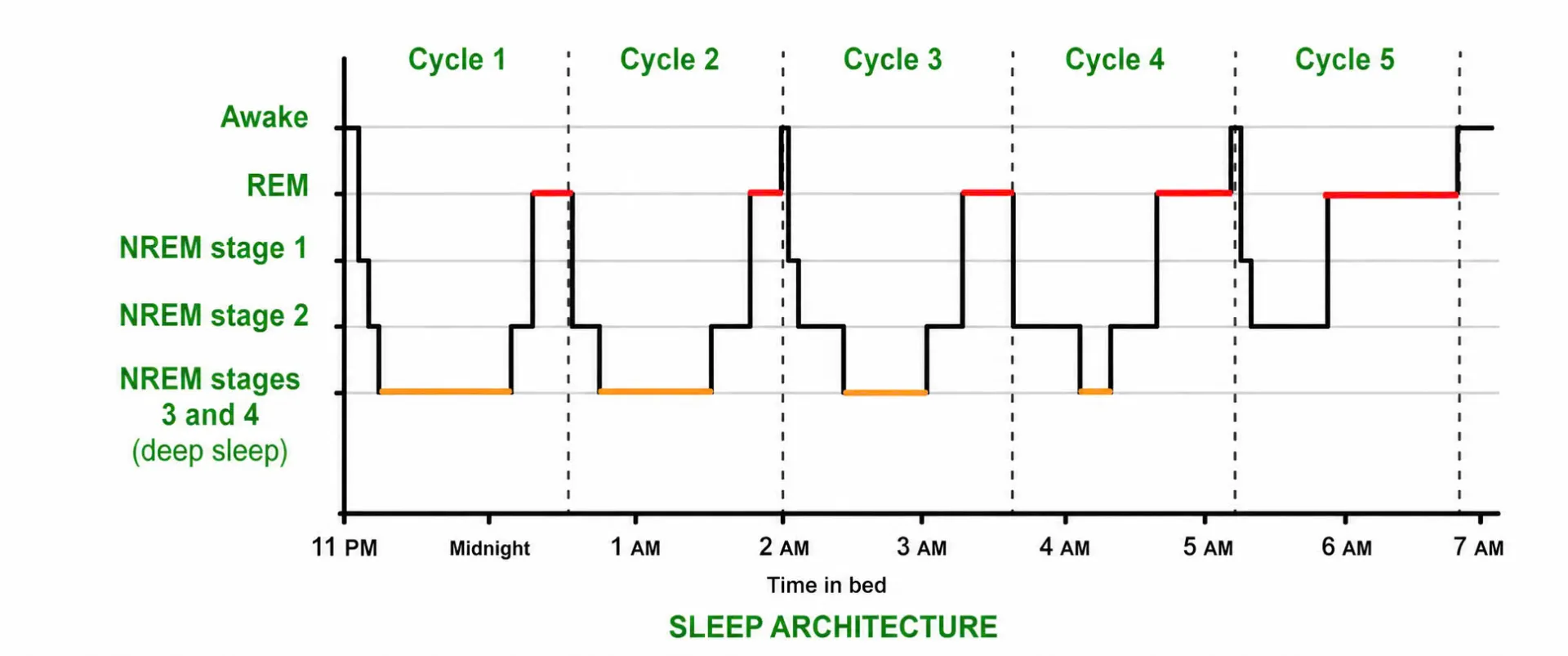
This demonstrates that sleep operates according to a natural periodic rhythm rather than being a continuous state of prolonged immobility. If you sleep too little, these cycles are cut short, forcing the body to keep working before it has fully recovered. Conversely, oversleeping can sometimes disrupt the biological clock, inducing feelings of tiredness and sluggishness instead of vigor.
Many people also wonder whether getting eight hours of sleep but with interruptions is considered healthy. In reality, sleep quality is just as important as duration. Uninterrupted nighttime sleep always provides better recovery than fragmenting sleep into separate, smaller intervals. Nighttime is when the hormone melatonin is secreted at its peak, making it easier for the body to fall into a deep sleep. Frequently waking up in the middle of the night breaks the sleep cycles, preventing the brain from completing its recovery process holistically.
However, this does not mean that afternoon naps are useless. A short nap of about fifteen to thirty minutes at noon can help reduce stress, improve alertness, increase concentration, and give the eyes a rest. Nevertheless, naps are merely supportive and cannot entirely replace the primary nighttime sleep. The human body is inherently programmed to rest the most when it is dark; thus, staying up at night and sleeping during the day over the long term can easily cause biological rhythm disruptions and impact health.
When maintaining a habit of getting enough sleep, people reap numerous benefits. First and foremost is physical health. Those who sleep sufficiently usually have a better immune system, fewer minor illnesses, stable cardiovascular health, and a more efficient metabolism. Conversely, prolonged sleep deprivation can easily lead to memory decline and increase the risk of obesity, diabetes, high blood pressure, and cardiovascular diseases. Sleep also directly affects emotions and mental well-being. A well-rested person is typically better at controlling their emotions, thinks more positively, and stays more focused on both study and work, whereas lack of sleep makes people easily irritable, anxious, stressed, and markedly reduces work productivity.
Especially for pupils, students, or intellectual workers, sleep plays an incredibly vital role. Many believe that staying up late to study will yield better results, but in truth, the brain requires sleep to consolidate memories and process information. A brain fatigued by sleep deprivation will struggle to absorb knowledge, show slower reflexes, and suffer from reduced creativity. It can be said that getting enough sleep is not a waste of time, but rather an investment in long-term health and living efficiency.
Even so, in modern society, maintaining the habit of sleeping a full eight hours is by no means easy. The pressures of education, work, society, and an irregular lifestyle cause many to gradually lose their natural rest hours. Therefore, to cultivate healthy sleep habits, each individual needs to learn to manage their time wisely, limit the use of electronic devices before bed, avoid prolonged late nights, and maintain a fixed sleep schedule every day. A quality sleep lies not only in the number of hours slept but also in the regularity and stability of the circadian rhythm.