
From bustling frontages to data infrastructure and AI
In the past, a "golden" piece of land was defined as the intersection of major avenues, located in commercial and financial centers with The real estate cycle from 2026 onwards is witnessing a major refinement in investment mindset. For decades, the global real estate market, and particularly in Vietnam, has been driven by a single postulate: Geographic location and transport infrastructure.
However, as central land banks gradually deplete and macroeconomic variables shift abruptly, "buying land waiting for it to become an urban district" or "hunting for frontages" are no longer guarantees of profit. The value of a real estate asset in the next one to two decades will be shaped by structural hidden factors: Data infrastructure serving artificial intelligence, the inversion of the population pyramid, the extremity of climate change, and micro-urban planning orientation.
heavy foot traffic. Moving into 2026, the concept of "golden land" is being redefined by institutional investors through the boom in data center real estate.
According to alternative asset analysis reports by CBRE and JLL, Data Centers have risen to become one of the commercial real estate segments with the highest profit margins and investment appeal globally. The core reason stems from the arms race in Generative Artificial Intelligence (Generative AI).
Operating AI systems requires enormous energy sources. According to estimates from the International Energy Agency (IEA), an AI-integrated search query consumes nearly 10 times more electricity than a standard text search. Therefore, the criteria for evaluating the value of a land plot for a Data Center are completely separate from frontage location.
A land plot sought after by the tech elite must meet three critical factors: proximity to an ultra-high capacity substation, possession of abundant water resources to operate massive chiller cooling systems, and a location on the intersection of submarine fiber optic cables or national core fiber optic networks.
In the Asia-Pacific region, the shift of capital flows into data centers is reshaping land values in industrial peri-urban areas.
Moreover, AI not only creates a new type of real estate but also completely changes how humans value assets. Automated Valuation Models (AVM) today do not merely compare the sales prices of neighboring houses. They collect millions of data points from satellite imagery, noise pollution levels, real-time traffic flow, and government public spending plans to flood history in order to provide an accurate price. The asymmetric information advantage that once helped land brokers manipulate prices is gradually disappearing. In the future, real estate developers and brokers who hold and decode big data will be the masters of the game.
Demographic variables
The real estate market has long operated on the assumption of a young population, constantly marrying and in need of buying their first home. However, demographic shifts are completely redrawing this picture.
The rise of the senior housing segment is the clearest testament. According to data from the United Nations Population Fund (UNFPA), Vietnam is one of the countries with the fastest aging rates in the world and is expected to officially transition from an "aging" to an "aged population" by 2036. By 2050, it is estimated that over 20% of Vietnam's population will be over 60 years old. This transformation creates a massive market gap.
The new generation of seniors has significant accumulated wealth, open mindsets, and does not want to depend on or become a burden to their children. New-style retirement communities, which combine high-end independent living spaces with internal healthcare systems, bedside emergency buttons, personalized nutrition plans, and shared communal activities, are attracting huge capital inflows. Instead of focusing on building peri-urban residential areas with school amenities, the next goldmine will be projects that anticipate the flow of the silver economy.
Conversely, Generation Z is redefining the role of commercial real estate, specifically shopping malls. A few years ago, many experts worried that the dominance of e-commerce would create "ghost malls." Yet, current data points to a different reality. Gen Z shops for basic goods online, but they crave physical experiences that cannot be digitized.
According to retail space research reports by Savills, the proportion of area dedicated to entertainment, art exhibitions, co-working spaces, and F&B (food and beverage) in modern shopping centers has surged to 30% to 40%, instead of just 10% as in the old model. Shopping malls are saving themselves by transforming from "places holding goods" into "destinations for community and events."
New living standards
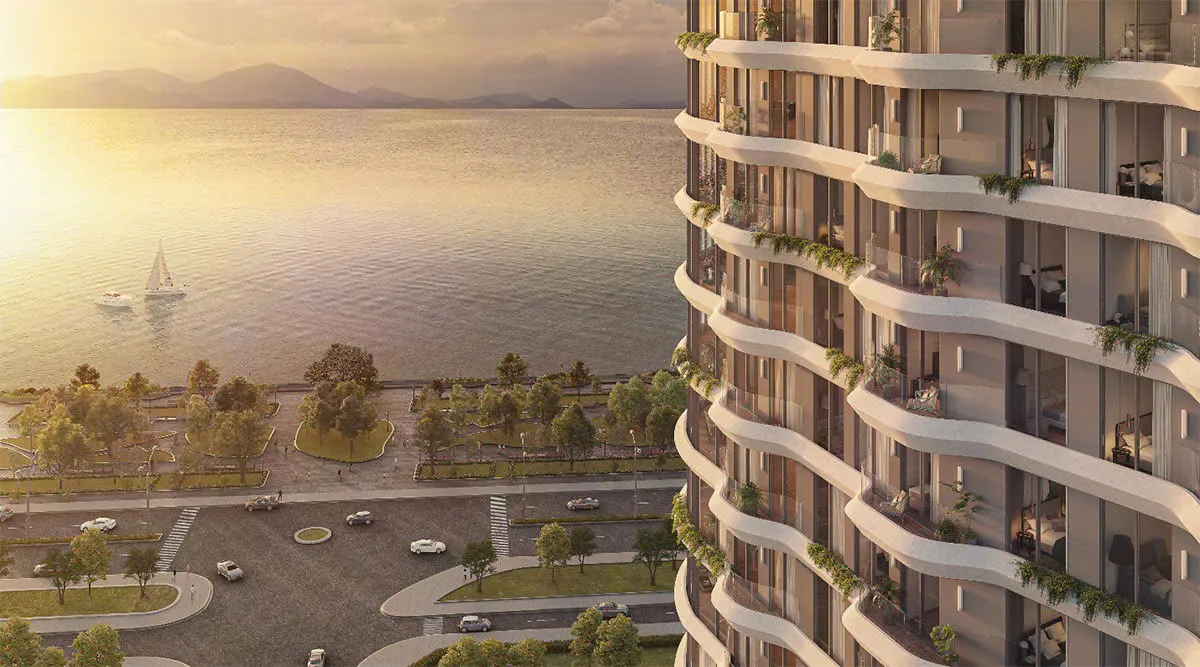
As global warming enters an irreversible stage, nature is beginning to directly intervene in the balance sheets of the real estate industry. Environmental factors and climate risks are no longer media slogans but have become actual costs.
The global Urban Land Institute (ULI) has repeatedly issued warnings that "climate risk is investment risk."
In strongly developed markets like Florida (USA) or coastal nations, asset values are facing intense downward pressure not due to a lack of demand, but because home insurance premiums are skyrocketing in the face of hurricane and sea-level rise risks.
In Vietnam, from 2026, new-generation homebuyers will begin to factor criteria such as flood history, landslide risks, and extreme temperature levels into their valuation formulas. Assets lacking climate resilience will face a "brown discount," depreciation, and illiquidity. Conversely, structures achieving green certifications, utilizing renewable energy, and featuring high-quality insulation materials will enjoy a "green premium."
Parallel to climate safety is the boom in wellness real estate. The global pandemic has permanently altered buyers' value systems. A report from the Global Wellness Institute values the Wellness real estate market as approaching the hundreds-of-billions-of-dollars milestone with a double-digit annual growth rate.
High-end amenities no longer lie in gold-plated faucets or marble-tiled lobbies. The new standard of luxury is intangible amenities: Centralized HEPA air filtration systems, tap water quality control, circadian lighting design, volatile organic compound (VOC)-free building materials, and completely soundproof spaces for meditation. Physical and mental health have become the new currency in the real estate industry.
The future of planning
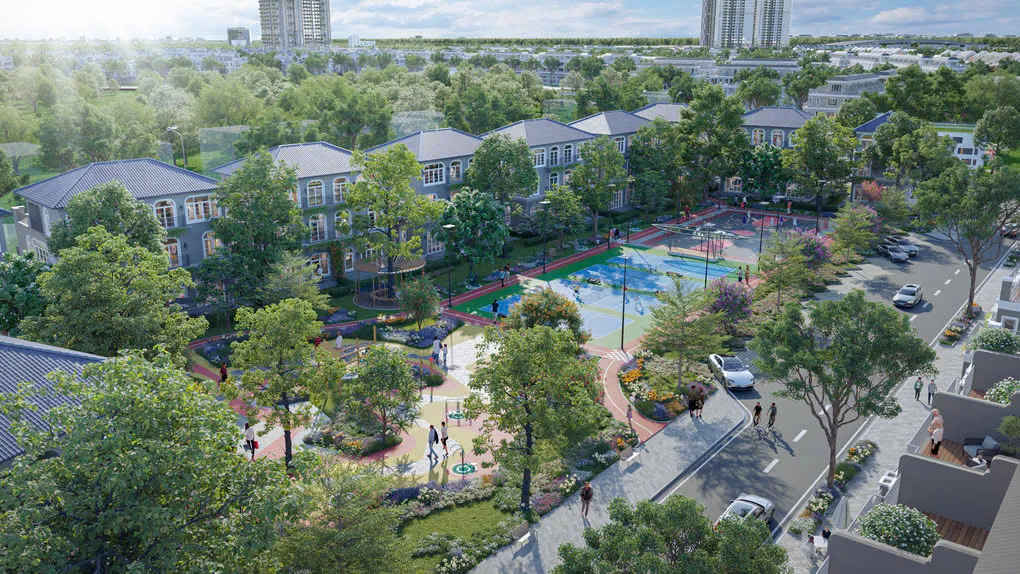
How humans use time is driving a completely new urban planning philosophy. Emerging strongly after the pandemic, the "15-Minute City" model proposed by Professor Carlos Moreno is becoming a guiding principle for global planners. The core of this concept is urban decentralization: Instead of dividing the city into separate functional zones (working areas, sleeping areas) that force millions to commute long distances every day, all essential needs from education, healthcare, and employment to shopping must be accessible within a 15-minute walk or bike ride.
The value of real estate will be measured by the density and quality of the internal ecosystem, rather than the travel distance to the central square. Time is the new luxury good that real estate must be able to provide for its residents.
To operate these compact and complex urban areas, the indispensable core technologies are Digital Twins and AI-integrated smart Building Management Systems (BMS).
Instead of designing on static 3D drawings, leading developers are building digital twin replicas of entire areas. Digital Twins integrate real-time data to accurately simulate wind directions, the level of sun glare on individual apartments, model rush hour traffic congestion, or predict the path of water flow during extreme flooding, thereby fine-tuning the design before laying the first brick.
On the operational side, IoT-integrated buildings can self-diagnose incidents, predict equipment lifespans for preventative maintenance, and automatically reduce electricity usage in unoccupied areas. A sharp decrease in long-term operational expenses (OPEX) will increase the actual rate of return for asset owners.