Vietnam's long-standing customs and traditions are not only a thread connecting generations, but also possess a powerful cultural attraction that sparks deep curiosity among international visitors.
The tradition of burning paper offerings and a parallel world connected to the deceased
The first practice, and one that always makes the strongest visual impression on international visitors, is the habit of burning paper money and various types of paper offerings. On street corners, sidewalks, or in front of Vietnamese homes on the first and fifteenth days of the lunar month, and especially during the Lunar New Year, the glowing fires that turn stacks of paper money, houses, and cars into ashes often make foreigners stop and watch with intense curiosity. From the perspective of many visitors, spending real money to buy paper models and then immediately burning them seems like an extremely strange act.
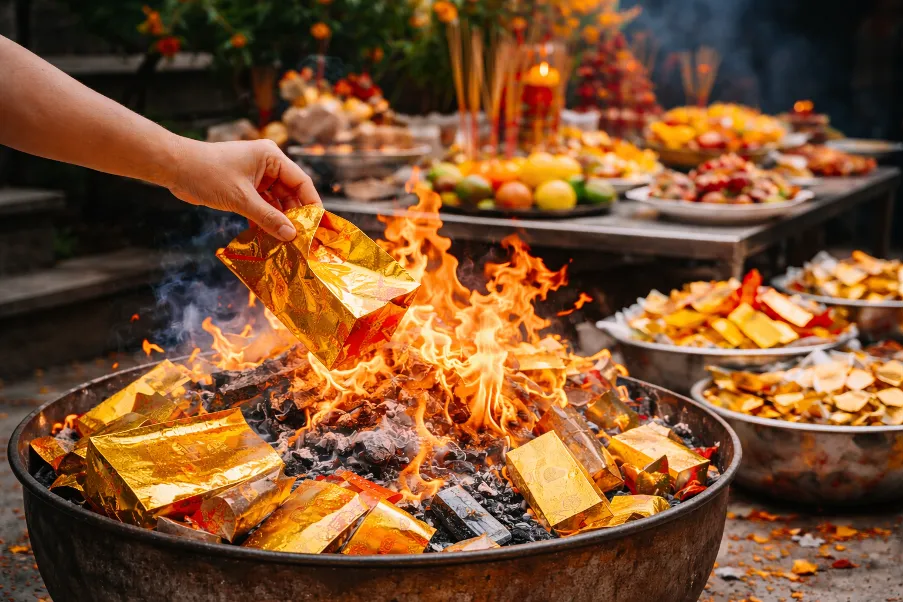
However, once the practice is explained in greater depth, they often express understanding and appreciation for its profound humanistic nature. Burning paper offerings is not simply an act of superstition, but a vivid expression of the principle of "when drinking water, remember its source" and a strong belief in an afterlife. Vietnamese people believe that death is not a complete ending, but merely a transition into a parallel world.
Sending money and everyday necessities to ancestors through the flames is a way for the living to express filial piety, care, and an unbreakable spiritual bond with loved ones who have passed away.
Eating balut to "reverse" bad luck
While Western cultures have lucky symbols such as four-leaf clovers or horseshoes, Vietnamese people have an extremely unique way of warding off bad luck through food: eating balut. For most foreign visitors, balut, or fertilized duck egg, is already one of the ultimate tests of courage because the duck embryo inside the shell is visibly developed. Therefore, the fact that Vietnamese people use this somewhat "frightening" dish as a psychological remedy to drive away bad omens makes them even more surprised and intrigued.
The secret behind this custom lies in the meaning of the Vietnamese word "lon," which means to reverse or turn a situation around. When someone is experiencing a series of unfortunate events in work or life, they may eat balut with the belief that their bad luck will immediately be "reversed" into good luck.
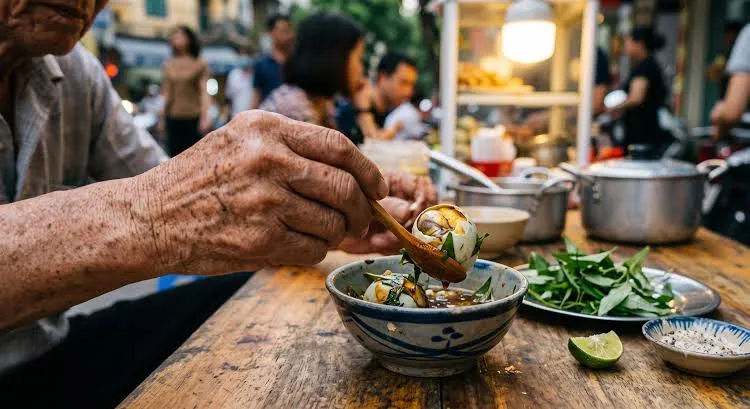
Foreign visitors are often warned by local guides about an extremely strict unwritten rule: when eating balut to ward off bad luck, they must eat an odd number of eggs, either 1 or 3, and after eating, they must use their feet to crush the eggshells. If they eat an even number, such as 2 or 4 eggs, the bad luck that was reversed by the first egg will immediately return to its previous state with the second egg, causing the attempt to ward off bad luck to completely lose its effect.
The first-footing tradition and the rule of keeping trash in the house
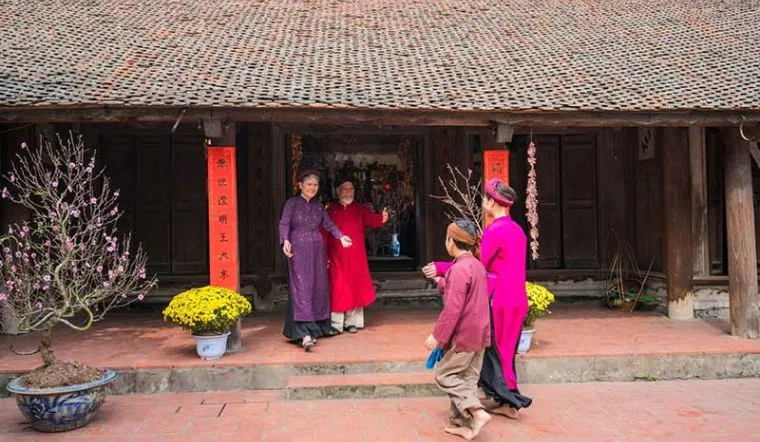
The Lunar New Year is a period filled with many customs that often leave foreigners curious and prone to making mistakes because of the complex taboos involved. A typical example is the tradition of first-footing at the moment of New Year's Eve or on the morning of the first day of the Lunar New Year. Vietnamese people believe that the first guest to enter a home in the new year will bring an energy that determines the family's fortune, health, and prosperity throughout the following 365 days. Therefore, families often deliberately "select" people whose zodiac signs are compatible with the head of the household, who have an outgoing personality and a harmonious family, to be the first-footing guest. At the same time, people who are experiencing sadness or mourning will voluntarily avoid being among the first to visit others during Tet so as not to bring misfortune to someone else.
In addition, the custom of absolutely not sweeping the house, or, if sweeping is necessary, only gathering the trash into a corner without throwing it away during the first three days of the new year, is another practice that greatly surprises Western visitors. While in other cultures, keeping the house clean and taking out the trash every day is a sign of tidiness, in Vietnam, throwing trash out of the house during Tet is considered equivalent to throwing away the family's wealth, money, and good fortune with one's own hands.
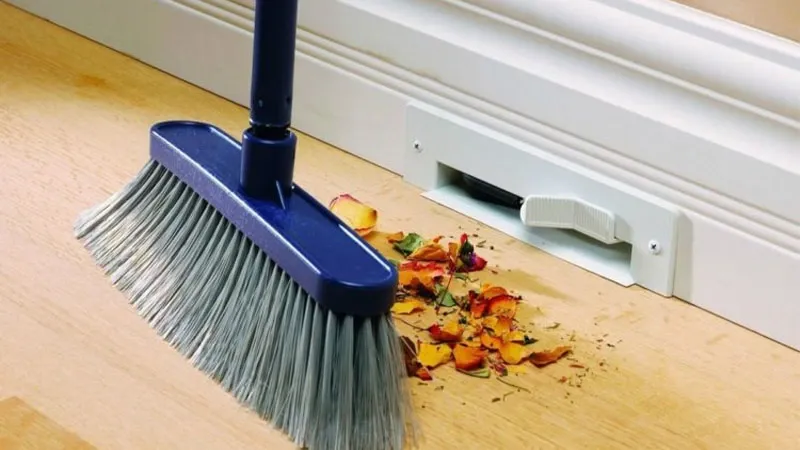
This reversal in everyday thinking turns the broom during Tet into an object that is effectively "sealed away," creating a distinctive atmosphere that is both solemn and intriguing in the eyes of international visitors.
The holistic philosophy of Feng Shui from architecture to everyday life
The dependence on and strong belief in the system of feng shui principles among Vietnamese people is a broad subject that continually sparks the curiosity of foreign experts and visitors coming to Vietnam. They recognize that feng shui is not a form of mysticism detached from reality, but something that is deeply present in and influences many major and minor decisions made by local people.
From choosing the direction of a doorway when building a house, arranging the ancestral altar, placing mirrors in the bedroom, and choosing the color of a car, to selecting the date and time for a store opening or signing major business contracts, everything must go through a process of calculating the harmony between the elements of Metal, Wood, Water, Fire, and Earth.

For foreigners, the idea that a living space or an action can create a flow of "prosperous energy" that helps people stay healthy and achieve success in business may initially sound vague. However, after directly experiencing the openness and coolness of old houses built according to the feng shui principle of "sitting on the mountain and facing the water," or witnessing the peace of mind experienced by Vietnamese people when following natural principles, visitors gradually realize that this is a valuable treasure of indigenous knowledge.
Feng shui is essentially the Vietnamese way of seeking complete harmony between people and their surrounding environment, reflecting the aspiration for a peaceful and smooth life.