

Owning a home is always a major milestone in life, representing the realization of the Vietnamese philosophy of “settling down before building a career,” a belief deeply rooted in Vietnamese culture.
For first-time homebuyers, this is not simply a major commercial transaction, but a life-changing financial decision that can shape their lifestyle, future plans, and cash flow for decades. However, the real estate market is a complex maze filled with legal pitfalls, information asymmetry, and invisible psychological pressures that can easily trap inexperienced buyers, leaving them at risk of losing their deposits or taking on debts beyond their ability to manage.
To turn the dream of owning a home into a secure foundation for the future, buyers need to prepare carefully, from understanding cash flow and practical legal knowledge to developing the skills needed to assess a property in person.
Practical financial management and the “listed price” trap
One of the most common mistakes made by people preparing to buy their first home is focusing solely on saving enough for a down payment of around 30% to 40% of the property's value while overlooking the long-term financial burden that begins after taking possession of the home.

A core rule recommended by financial experts is to follow the “30/20/10 rule” or ensure that total monthly principal and interest payments do not exceed 30% to 40% of the household's fixed income. A loan lasting 15 to 20 years can gradually erode your quality of life if you have to use nearly every remaining dollar each month to repay the bank, leaving no financial reserve for unexpected events such as illness, unemployment, or a decline in income.
First-time buyers can also easily fall into the trap of the “listed price” advertised by developers or real estate agents. An apartment listed at VND 3 billion does not mean you only need VND 3 billion to move in. Savvy buyers should calculate a separate figure for the “cost of making the home livable” before signing the purchase agreement.
These hidden costs may include registration fees, notarization fees, maintenance fees, which are typically 2% of the apartment's value, and interior design and furnishing expenses, which can range from VND 150 million to VND 300 million. Buyers may even have to pay rent for six months to a year if the project is handed over behind schedule. For landed houses, renovation costs, repairs to aging electrical and plumbing systems, and structural reinforcement can become substantial expenses that first-time buyers are most likely to underestimate.
The legal hurdle and the need for multi-dimensional information screening
In real estate, legal ambiguity is one of the leading reasons first-time buyers fall victim to scams or end up suffering financial losses. When viewing a property, you should never rely entirely on one-sided promises from agents or glamorous renderings provided by project developers. Instead, conducting independent market research and verifying legal documents yourself is an essential skill for protecting your investment.
For a private house, buyers should ask the owner to provide the original Certificate of Land Use Rights and Ownership of Houses and Other Assets Attached to Land. They should carefully verify the owner's information, compare the actual area with the figures stated on the certificate, and check whether the property is currently mortgaged to a bank.
Buyers should also proactively bring a copy of the certificate to relevant authorities, such as the local People's Committee or a branch of the Land Registration Office, to determine whether the property is located in an area affected by a pending planning scheme, a road-widening project, or disputes and asset seizure proceedings.
For apartments under construction, the required legal documents that developers must provide include the land allocation decision, construction permit, certification of fulfillment of financial obligations to the state, and, most importantly, an official notice from the Department of Construction confirming that the housing is legally eligible for sale or lease-purchase.
In addition, choosing a reputable bank to provide a guarantee for the project's completion and handover is another important layer of protection that can help first-time buyers minimize the risk of a project being stalled or abandoned. All terms concerning the handover deadline, penalties for delays, permitted variations in floor area, and the timeline for obtaining the ownership certificate should be clearly and transparently stated in the legally binding contract rather than left to verbal promises.
On-site property assessment
A common but costly compromise made by first-time buyers when they find a property that fits their budget is convincing themselves that they will “get used to it after living there for a while.” They may accept a room that is slightly too dark, a commute of more than 15 kilometers, an area that frequently floods during heavy rain, or a severe lack of car parking.
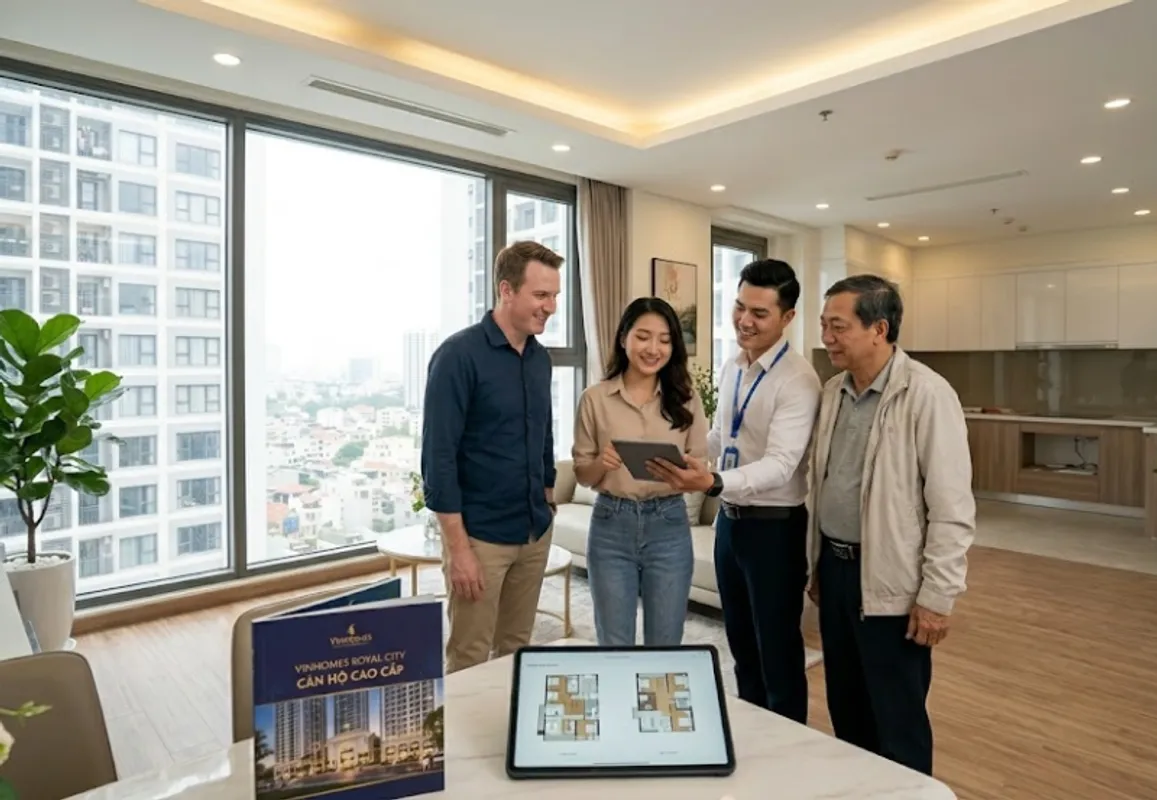
However, it is important to clearly distinguish between things that can be changed and things that are fixed. An unattractive kitchen can be remodeled, and an unpleasant wall color can be repainted within a few days. But the property's location, exposure to sunlight and heat, noise from major roads, distance to children's schools, and surrounding population density are factors you will have to deal with every day for the next five to ten years.
For an accurate on-site assessment, homebuyers should not limit their visits to quiet business hours arranged by real estate agents. Instead, conduct discreet inspections at different times of the day. Visit during rush hour to assess traffic congestion, come at noon on a hot and sunny day to evaluate the home's heat insulation, and visit during heavy rainfall to determine whether flooding could cut the area off from surrounding neighborhoods.
Take the time to talk to nearby neighbors or residents currently living in the building. They can provide valuable insight into the quality of property management, the history of elevator operations, security conditions, and other inconveniences they have experienced firsthand.