
The global labor market is undergoing one of the most dramatic transformations in history, with the boundary between job security and displacement becoming more fragile than ever. The rapid rise of artificial intelligence (AI) and automation is no longer a distant forecast discussed in boardrooms, it has become a direct driver of workforce reductions at companies around the world.
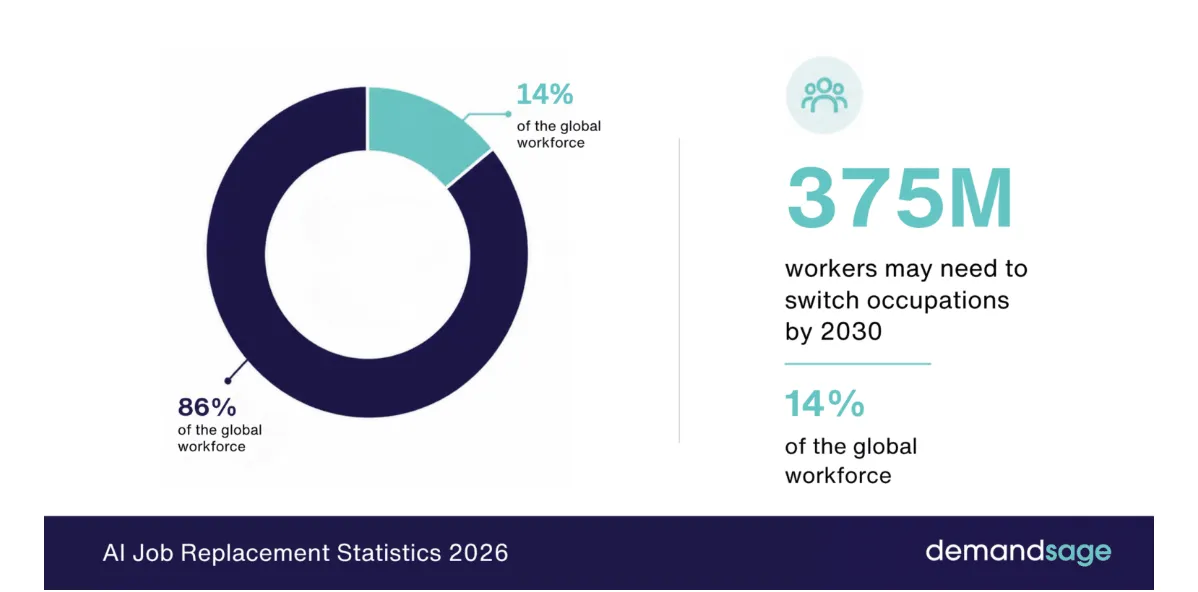
According to data from global workforce-tracking organizations, AI was cited as a direct factor behind more than 54,836 layoffs in the United States in 2025 alone, nearly ten times the figure recorded in 2023. Entering 2026, the wave has continued to sweep through the labor market, with as many as 54% of publicly announced workforce reductions in the technology sector citing AI and automation as contributing factors. This reality sends a stark warning: workers who continue to operate according to outdated ways of thinking and rely heavily on repetitive skills are effectively putting themselves on the market's list for elimination. To avoid falling behind, individuals must proactively reposition themselves and build an entirely new portfolio of capabilities.
The first and most critical key to maintaining a competitive position is shifting from the mindset of possessing a "static degree" to developing "dynamic self-learning" capabilities through continuous reskilling.

The latest Future of Jobs Report from the World Economic Forum (WEF) points to a striking figure: an estimated 39% of workers' core skills worldwide are expected to change completely by 2030. This means that knowledge acquired in school or experience accumulated five years ago is gradually losing its practical value. Today's workers can no longer rely on a single area of expertise to earn a living throughout their entire careers.
Taking initiative in self-directed learning and committing to long-term learning strategies is not only a personal responsibility but also an important benchmark by which companies assess an employee's ability to adapt.
However, contrary to the vague fear that AI will take away every job, market realities show that technology is redefining how work is performed. A survey by the European Central Bank (ECB) found that the share of workers using AI in their daily work surged to 52% in 2026. AI may not replace humans outright, but people who know how to use AI will undoubtedly have an advantage over those who do not.
Yet technology is merely a productivity lever. The fundamental differentiator that enables workers to remain resilient is "carbon intelligence", including critical thinking, creativity, complex problem-solving, emotional intelligence, and leadership skills. These are areas where computer algorithms remain limited, allowing people to move beyond simply "performing tasks" toward creating genuine value.
Another crucial but often overlooked element of career survival is building a strong professional network and establishing a sustainable personal brand. Many senior professionals, despite having decades of experience, still find themselves struggling during major corporate restructuring because they have failed to prepare in terms of professional relationships and social capital. In a market where high-quality positions are often filled through internal channels or professional referrals, isolating oneself within an individual workspace can be a critical mistake.
Smart workers need to proactively connect with colleagues and professionals in their fields, participate in specialized professional communities, and continuously expand their visibility across professional social-media platforms. This network not only serves as a "lifeline" for financial support and new opportunities when a crisis strikes, but also functions as a sensitive information channel, helping individuals identify emerging trends early and prepare to move before the market forces them to.
Finally, psychological resilience and the ability to adapt flexibly form the foundation for sustaining a long-term career. In the modern labor market, there is no longer such a thing as "lifetime job security" for any position or profession. A worker may hold between 10 and 15 different jobs over the course of their working life. Therefore, maintaining an open mind, being willing to acknowledge what one does not know, and remaining prepared for unexpected disruptions are essential.