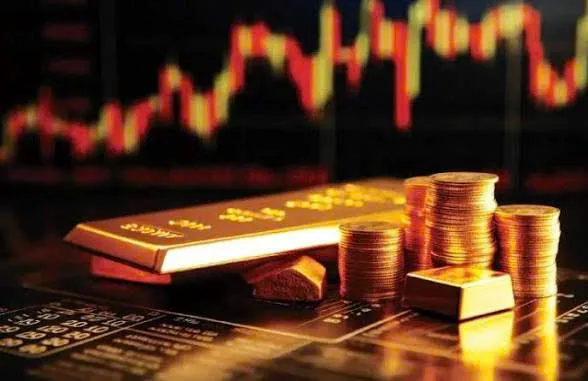

Specifically, on the international market, the world gold price free-fell from the historic peak of $5,595/ounce to trade at around $4,100 to $4,200/ounce by mid-June. This 23% plunge in less than four months is not merely a standard technical correction but also reflects a strong pivot in global capital flows.
Similarly, in the Vietnamese market, the downward spiral delivered an even more severe shock. Looking solely at SJC gold bars, the price evaporated by approximately 54.9 million VND/tael compared to the peak of 190.9 million VND/tael in early March. By mid-June 2026, the SJC gold price had deeply retreated to 147 million VND/tael. This continuous losing streak is clearly demonstrated through the numbers: March down 8.34%, April down 5.14%, May down 4.56%, and particularly June witnessing a severe drop of up to 14.2%.
Deep-rooted inflationary pressures
Behind the terrifying drop in gold prices is a shifting macroeconomic structure, centered around the extremely hawkish monetary policy of the US Federal Reserve (Fed) under Chairman Kevin Warsh. Contrary to expectations of monetary easing and economic stimulus injections, the latest data from the US economy has completely extinguished hopes of an interest rate cut. The US Consumer Price Index (CPI) for May remained anchored at a high level, rising 4.2% year-over-year, while the Producer Price Index (PPI) surged to 6.5%. These persistent inflation figures force the Fed to maintain a high-interest-rate environment for longer than expected.
From an investment perspective, when interest rates are kept high, the opportunity cost of holding a non-yielding asset like gold becomes overly expensive. Combined with high 10-year US Treasury yields and the continuous strength of the USD, massive speculative cash flows quickly withdrew from the precious metals market to seek safer and more attractive investment channels.
The shift in institutional capital flows and easing geopolitical risks
The catalyst accelerating the sell-off was the action from massive Exchange-Traded Funds (ETFs) and a pivot in physical demand. In May 2026, Chinese gold ETFs recorded their first month of capital outflows after eight consecutive months of net buying, with an exodus amounting to 8.2 billion Yuan (equivalent to 1.2 billion USD). The decline in wholesale demand and the stagnation of the jewelry market in Asia severed the demand force that was once a solid bedrock for gold prices.
In parallel, global geopolitical risks, which once acted as the jet engine pushing gold prices beyond $5,500/ounce, have shown signs of cooling down. Decisions to restrain the expansion of large-scale armed conflicts, along with the prospect of reaching diplomatic agreements to avoid disruptions to global energy supplies, significantly eased investor concerns. As fear diminished, gold's risk premium was automatically discounted, leading to a massive wave of profit-taking from institutional investors who had accumulated the asset from the $2,500 price zone in early 2024.
Domestic market dynamics and the shift in crowd psychology
In the Vietnamese market, the downward momentum of global gold prices triggered a chain reaction that completely altered the domestic trading landscape. The most notable point in this recent volatility is the sudden narrowing of the premium between domestic and global gold prices, currently hovering around just 7 million VND/tael. The sight of people queuing up overnight to buy gold has entirely disappeared. Major trading entities now comfortably supply gold bars according to direct purchasing demands, free from the constraints of the previously sporadic online registration system.
However, this decline also exposes a massive risk for individual investors caught up in the fear of missing out (FOMO) at the peak. The spread between the buying and selling prices is currently being widened by gold dealers, surging to 5 million VND/tael at times, pushing the entirety of the price volatility risk onto the buyers. Those who unluckily bought in at the 190 million VND/tael mark are now facing heavy losses, while cash holders have fallen into a state of hesitation, wary of bottom-fishing when selling pressure shows no signs of stalling.
Market direction and prospects in the road ahead
The gold market is currently standing at a decisive crossroads. Many experts and major analytical institutions are forecasting the possibility of global gold prices continuing to fall deeper; some pessimistic views even suggest that the price could retest the $3,500/ounce support zone by the end of 2026 if the Fed continues tightening.
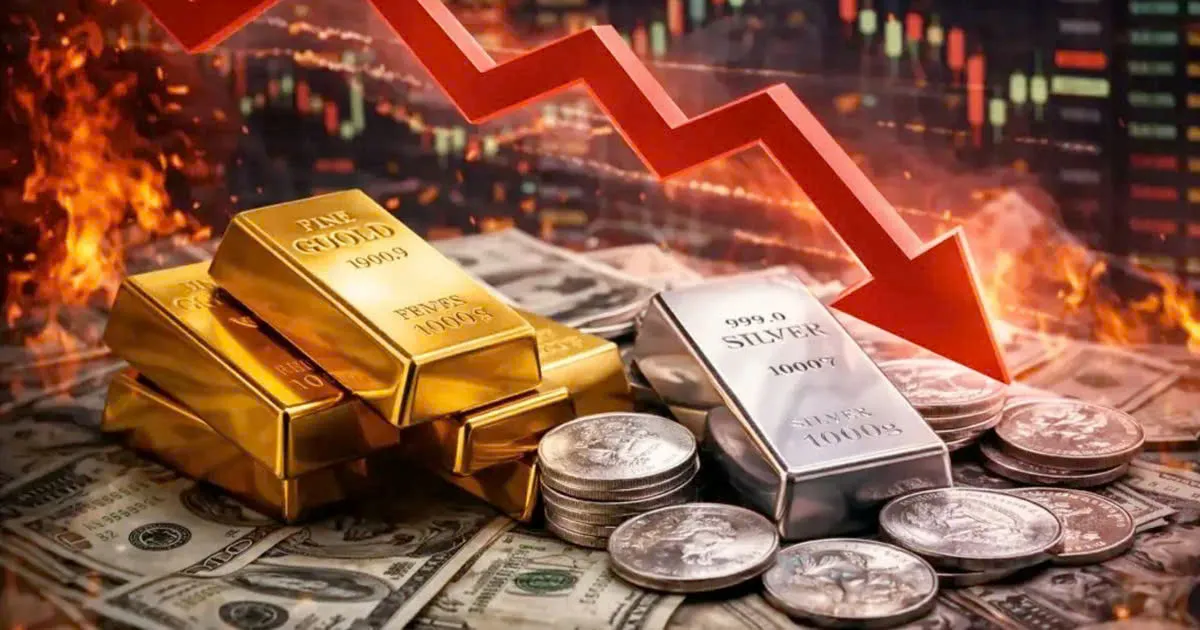
Nevertheless, from a long-term analytical perspective, this fierce 23% drop is evaluated as a mandatory and healthy shakeout following a hot growth cycle that lasted for over two years. The fundamental support structure for gold, including massive public debt levels, record government spending, and the fragmentation of the global economy, has not vanished.