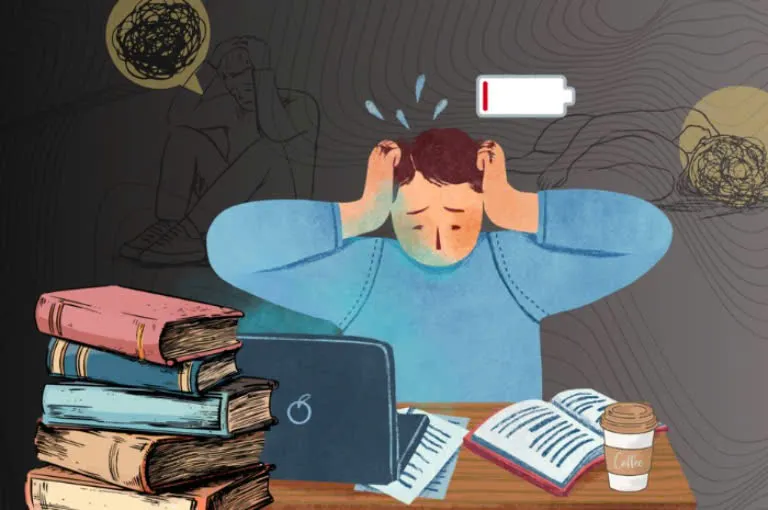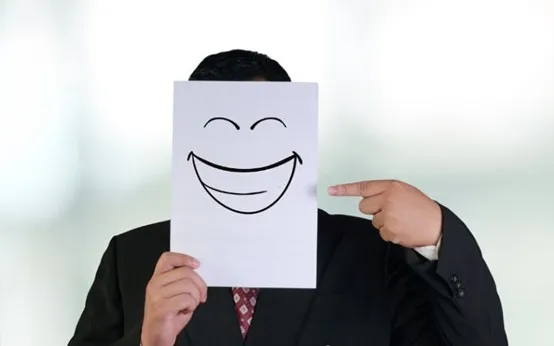

In the hustle and bustle of modern life, "are you okay?" has become a familiar social question, and "I'm fine" has naturally turned into a default answer, an automatic reflex uttered from the tip of the tongue without a single second of thought. We easily smile, typing to send the message "I'm alright" while breaking apart inside, or put on a perfectly ironed outfit to briskly walk to the office even though we just experienced an extreme panic attack last night.
Society seems to be implicitly setting a harsh standard, where maturity and professionalism are often equated with the ability to keep the outer shell always calm and flawless. The invisible pressure forcing oneself to appear stable, despite the storms howling in the mind, has pushed countless people into a psychological syndrome named "always needing to be okay," an exhausting play where everyone is struggling to play their part perfectly.
The truth is that no one is born knowing how to hide their true emotions; children always cry loudly when in pain and laugh heartily when happy. But in the process of growing up and stumbling, we are gradually infected by the fear of judgment from the crowd. The core reason causing people to bite the bullet and bury their deepest sorrows often stems from the obsession with being labeled as weak, incompetent, or lacking in courage. In a highly competitive environment, revealing weaknesses is often seen as stripping away one's own advantage.
Besides that, another secret and deeply bitter reason is the fear of becoming a burden. Refined and sensitive people often tell themselves that everyone has their own fierce battles, the outside world is exhausting enough, why pour their own negative emotions onto the shoulders of those around them? Tolerance and thinking for others, ironically, turn into cruelty towards one's own inner self.
However, emotions are not like a computer file where you can press the delete button and it permanently disappears; they exist and operate according to a mechanism of conservation. Suppressed sorrows and sidelined pressures do not evaporate at all, but silently settle, accumulating over time into a ticking time bomb called chronic stress. Continuously ignoring the inner voice, deceiving oneself that everything is fine, will gradually paralyze the soul's sensory system. One day, you realize you have not only lost the ability to shed tears to ease the pain, but also completely lost the capacity to be thrilled by pure joy.
More seriously, when you build too solid a fortress wall to protect a fake perfection, you have inadvertently cut off all bridges connecting your emotions to the outside world. Relationships that seemed close suddenly become superficial, because how can people truly touch and understand a person who never dares to reveal their most precarious hidden corners?
To rescue oneself from this suffocating syndrome, the biggest lesson and also the most difficult challenge that every adult must face is learning the art of "being not okay in a healthy way." This journey begins with the courage to be absolutely honest with oneself: allowing oneself to be weak, to be sad, to break down when endurance has reached its red limit. Recognizing and naming depression is not surrendering to fate, but the indispensable first step of the healing process. Bravely remove the "I'm fine" mask in front of those you truly trust, letting them see your fragility, and allowing yourself the right to lean on someone for once. Being weak at the right time does not diminish your value or professionalism; conversely, daring to reveal genuine vulnerability is indeed the highest form of bravery, the strongest glue to bond kindred spirits.
We are vivid human beings with a full spectrum of emotions, and the right to be "not okay" is the most primal privilege for us to truly live rather than merely exist.