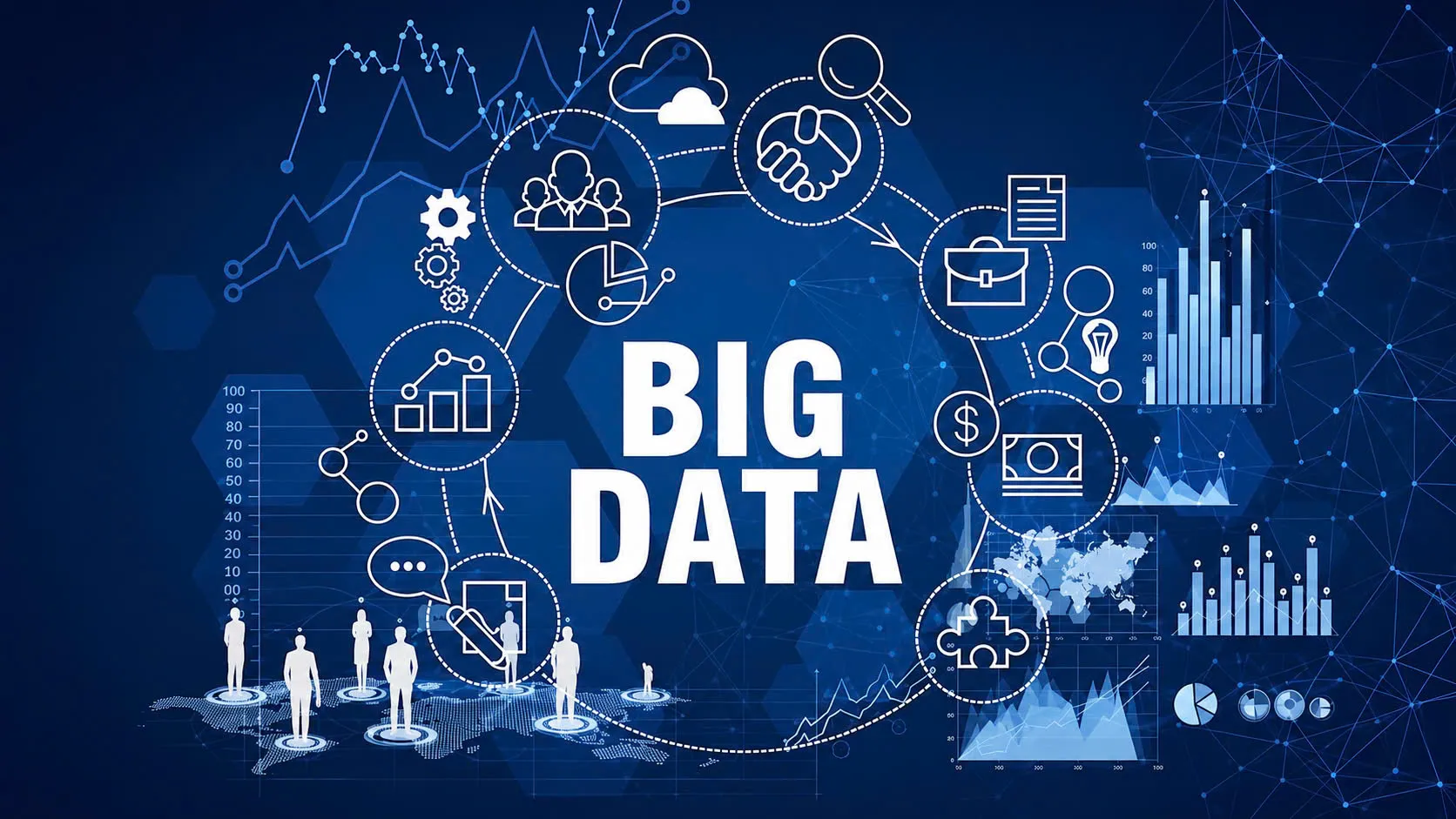

In the digital age, we often hear the term Big Data, but not everyone truly understands this concept. As the amount of data generated daily from social networks, smart devices, and online transactions increases rapidly, Big Data has become a crucial foundation helping businesses extract value from data.
According to Data-flair.training, Big Data refers to datasets that are large and complex in volume, so massive that traditional data processing software is incapable of capturing, managing, and processing them within a reasonable amount of time.
This data can be in structured, semi-structured, or unstructured formats. Big Data is often described through prominent characteristics such as large volume (Volume), fast processing speed (Velocity), diversity (Variety), reliability (Veracity), validity (Validity), and value (Value).
There is no specific convention on the capacity required to be considered Big Data. A dataset is considered Big Data when a business can use that massive block of data to analyze and transform it into actionable information to solve practical problems.
Typically, the scale of Big Data can reach up to Petabytes (PB).
For example:
· 1 MB ≈ 3,000 pages of a book.
· 1 GB ≈ 3 million pages of a book.
· 1 TB ≈ 3 billion pages of a book.
· 1 PB ≈ 3,000 billion pages of a book.
If you were to print all the data of 1 PB on A4 paper, the stack of paper could be about 300,000 km thick, equivalent to more than half the distance from the Earth to the Moon.
Some typical applications of Big Data
In banking
· Predicting customer needs.
· Determining branch locations.
· Forecasting necessary cash flow.
· Fraud detection.
· Enhancing system security.
In healthcare
· Predicting diseases.
· Monitoring patient conditions using smart devices.
· Storing medical records.
· Early diagnosis of various diseases.
· Forecasting the risk of disease outbreaks.
In retail
· Analyzing shopping behavior.
· Personalizing customer experiences.
· Forecasting supply and demand.
· Optimal product placement.
· Supporting the development of business strategies.
In services
· Analyzing customer needs.
· Collecting behavioral data.
· Designing suitable products.
· Optimizing customer care campaigns.
In Marketing
· Analyzing the market and competitors.
· Identifying target customers.
· Evaluating the effectiveness of advertising campaigns.
· Automating customer management.
· Recommending relevant content.
In entertainment
· Collecting information on user preferences.
· Recommending relevant content.
· Analyzing subscription and unsubscription behavior.
· Optimizing content distribution platforms.