

In modern life, office jobs or studies require us to sit in one place for many hours straight. This is a topic of concern for many, yet it remains underestimated. Many people are still subjective, thinking that sitting for a long time does not affect anything, even considering it a form of leisure. However, it is precisely this subjectivity that is “adding more teeth to the saw,” slowly and silently eroding our health every single day.
How Does Prolonged Sitting Erode Your Health?
Being glued to a chair for 8 to 10 hours a day leads to a series of severe consequences for the entire body:
· Metabolic function decline: Prolonged sitting slows down the metabolism, reducing the body's ability to break down fat and regulate blood sugar. This directly increases the risk of obesity and type 2 diabetes.
· Increased cardiovascular risks: When muscles are inactive, blood circulation slows down, creating conditions for fatty acids to clog blood vessels, leading to high blood pressure.
· Musculoskeletal degeneration: The pressure exerted on the spine when sitting is twice as high as when standing. Prolonged occurrence of this condition causes herniated discs, weakened glutes, and an increased risk of varicose veins.
· Mental health impact: Lack of physical activity reduces blood flow to the brain, making you easily sluggish, poorly focused, and increasingly stressed.

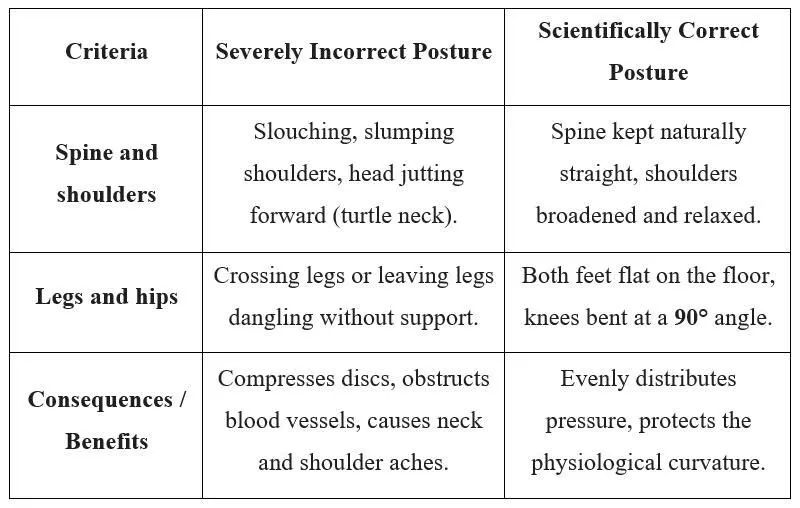
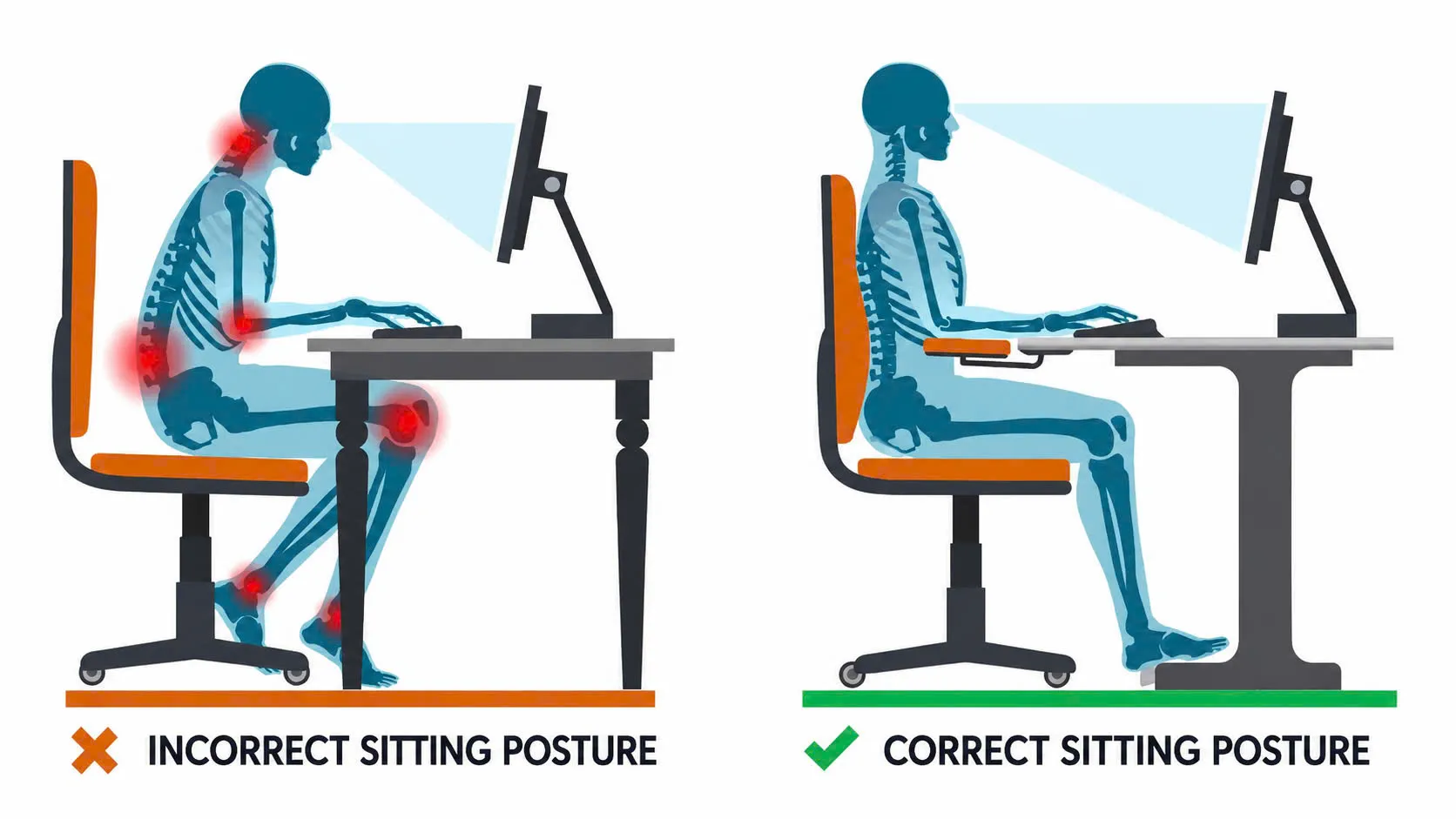
The Boundary Between Correct and Incorrect Sitting Postures
Sitting time is a factor, but how you maintain your posture directly determines the degree of damage to the musculoskeletal system.
Optimal Solutions to Help “Rescue” the Body
To break the “saw teeth” that are ravaging the body, you need to proactively reset your daily habits:
· Apply the golden 20-20-20 rule: For every 20 minutes of work, look at something at least 20 feet (6m) away for at least 20 seconds to relax your vision.
· Awaken the body every 45 minutes: Do not sit rigidly in one place. Stand up, stretch, or go get some water to stimulate blood circulation.
· Invest in your workspace: Use an ergonomic chair with back support, adjust the screen height appropriately, or alternate with a standing desk.
· Actively exercise after hours: Compensate for the sedentary time with at least 30 minutes of exercise every day with activities like swimming, yoga, or jogging.