

For many decades, the mainstream pattern of migration in society has always followed a vertical, inward-oriented path, with millions of young people leaving their villages and small towns to flock to major cities such as Hanoi and Ho Chi Minh City in pursuit of a better life. However, recent years have witnessed an extremely strong wave of movement in the opposite direction: Young people are leaving major cities to return to their local communities.

These are no longer impulsive decisions driven by a desire to escape pressure, nor are they the romanticized stories of "raising fish and growing vegetables" often portrayed on social media. In reality, this is a restructuring of lifestyles and a carefully calculated, sustainable career development strategy adopted by a segment of highly qualified workers.
Urban pressure and an awakening to quality of life
Major cities were once magnets for talent, thanks to promises of higher incomes and career advancement opportunities. However, rapid development has brought stark consequences: air pollution exceeding safe levels, chronic traffic congestion, and especially the real estate price crisis, which has made the dream of owning a home increasingly unattainable for younger generations.
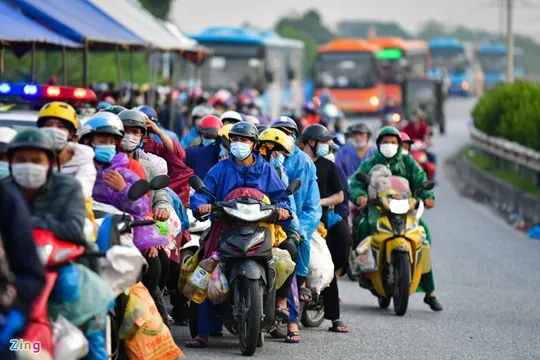
When most of their income must go toward rent, expensive service costs, and invisible pressures from a fast-paced culture, young people realize that they are working themselves to exhaustion simply to maintain a basic standard of survival in urban areas. Physical exhaustion, combined with emotional distress, has encouraged them to redefine the concept of success, shifting the focus from purely accumulating material wealth to optimizing mental health benefits and inner peace.
The development of technology and diverse employment opportunities
If leaving the city once meant falling behind in terms of information and career opportunities, the rapid expansion of internet infrastructure and remote work models has now erased this boundary. Digital technology has "flattened" the labor market, allowing software engineers, graphic designers, marketing specialists, and content creators to work from a café in Da Lat, a coastal rural area in Central Vietnam, or even their hometown while still managing projects on a global scale. This spatial flexibility allows young people to cut the opportunity costs associated with major cities while maintaining high productivity and income.

Instead of being confined to air-conditioned offices for eight hours a day and facing rush-hour pollution, they choose to take control of their time and optimize their productivity in spacious living environments close to nature in their local communities.
Building a career in their hometowns
Returning to their local communities with modern knowledge, professional management skills, and networks built after years of working in major cities, young people are bringing new vitality to regional economies. This trend has witnessed the rise of high-tech agriculture, sustainable ecotourism, and the digitization and elevation of traditional local specialty products through e-commerce platforms.
This is not a step backward or an act of giving up, but a journey back to one's roots to create value. By exploring the untapped potential of their local communities, young people are not only creating opportunities to become their own leaders but also contributing to solving employment problems, transforming the social landscape, and promoting more balanced development between rural and urban areas.
Limitations
Many young people have had to experience setbacks, even become disillusioned and return to the cities because they could not cope with inadequate infrastructure, healthcare, and high-end entertainment services, or struggled to adapt to local community culture.
Unlike the anonymous, privacy-respecting environment of cities, local communities often come with close-knit networks of relatives and neighbors, where the decision of a graduate or engineer to "leave the city" is often met with skepticism and judged in real life as a sign of failure or loss of status.
In addition, the lack of long-term capital, limited consumer markets, and insufficient local supply chains can quickly suffocate young start-up projects if young people bring only a head full of dreams without practical financial management skills and strong preparation.