The explosion of dating apps such as Tinder, Bumble, and Hinge has completely reshaped the way people approach love in the digital age.
Instead of chance encounters at coffee shops, libraries, or through traditional matchmaking, finding a partner has now been simplified into swiping left or right on a phone screen.
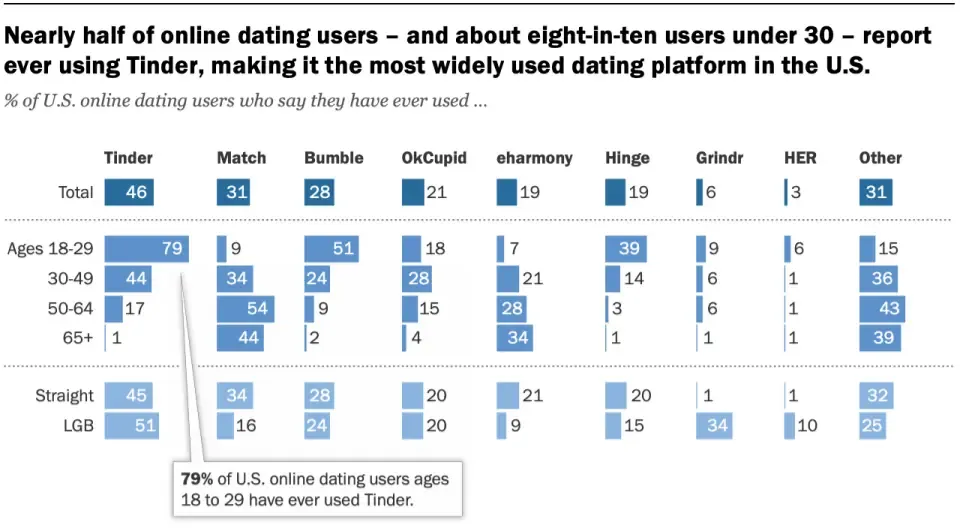
From a mathematical and probability perspective, dating apps clearly offer an undeniable advantage: the opportunity to access a large number of potential partners. Data from the Pew Research Center indicates that around 79% of adults in the United States have used these platforms. Having a huge "pool" of potential partners makes it easier for users to filter out people who share their interests, life perspectives, or specific criteria regarding education and religion, something that real-life environments may struggle to provide quickly.
For introverted people, those who are busy with work, or members of minority communities such as LGBT people, online spaces serve as a safer and less pressured environment to start a conversation. In reality, around 12% of Pew Research Center survey participants went on to form serious relationships or get married through these platforms. This shows that dating apps can serve as an extremely effective connection tool if users know how to take advantage of them.
However, although having more choices may sound ideal, it is precisely the biggest psychological trap that makes the search for love more difficult. When people are faced with too many options, they not only fail to feel happier, but instead fall into a state of decision paralysis and constantly question their choices.
A study published on the scientific journal ResearchGate by scientists at Tilburg University found that "rejection psychology" appears among dating app users. When browsing through too many profiles, people's standards tend to rise unrealistically. Users become more demanding and easily swipe past someone simply because of a small detail they do not like, because they always believe that "if I swipe one more time, there will be someone better, more attractive, and more interesting waiting."
On the other hand, because the information on dating apps is mainly based on images and a few brief lines of description, the tendency to judge people based on their appearance or superficial material values becomes more common.
A large-scale study conducted by the Australian National University (ANU) involving 6,500 couples from 50 countries pointed to a thought-provoking reality: couples who met online generally reported slightly lower levels of satisfaction, intimacy, and passion compared with those who met directly in real life. The reason is that algorithm-based matching sometimes connects people who have too little in common in terms of their core life backgrounds.
Another harsh practical aspect that needs to be acknowledged is that dating apps are ultimately profit-driven businesses. The business models of many "major players" rely on retaining users to display advertisements or sell service packages, creating addictive dopamine loops that make "hunting" for matches more important than actual dating.
However, as awareness of these downsides grows, the market is witnessing the rise of a new generation of platforms aimed at thoroughly addressing the "superficiality" of swipe culture. For example, while Hinge positions itself as an app "designed to be deleted," and Bumble gives women the initiative to start conversations, more recently, the emergence of platforms optimized for emotional depth, such as OVDating, has created a notable turning point.
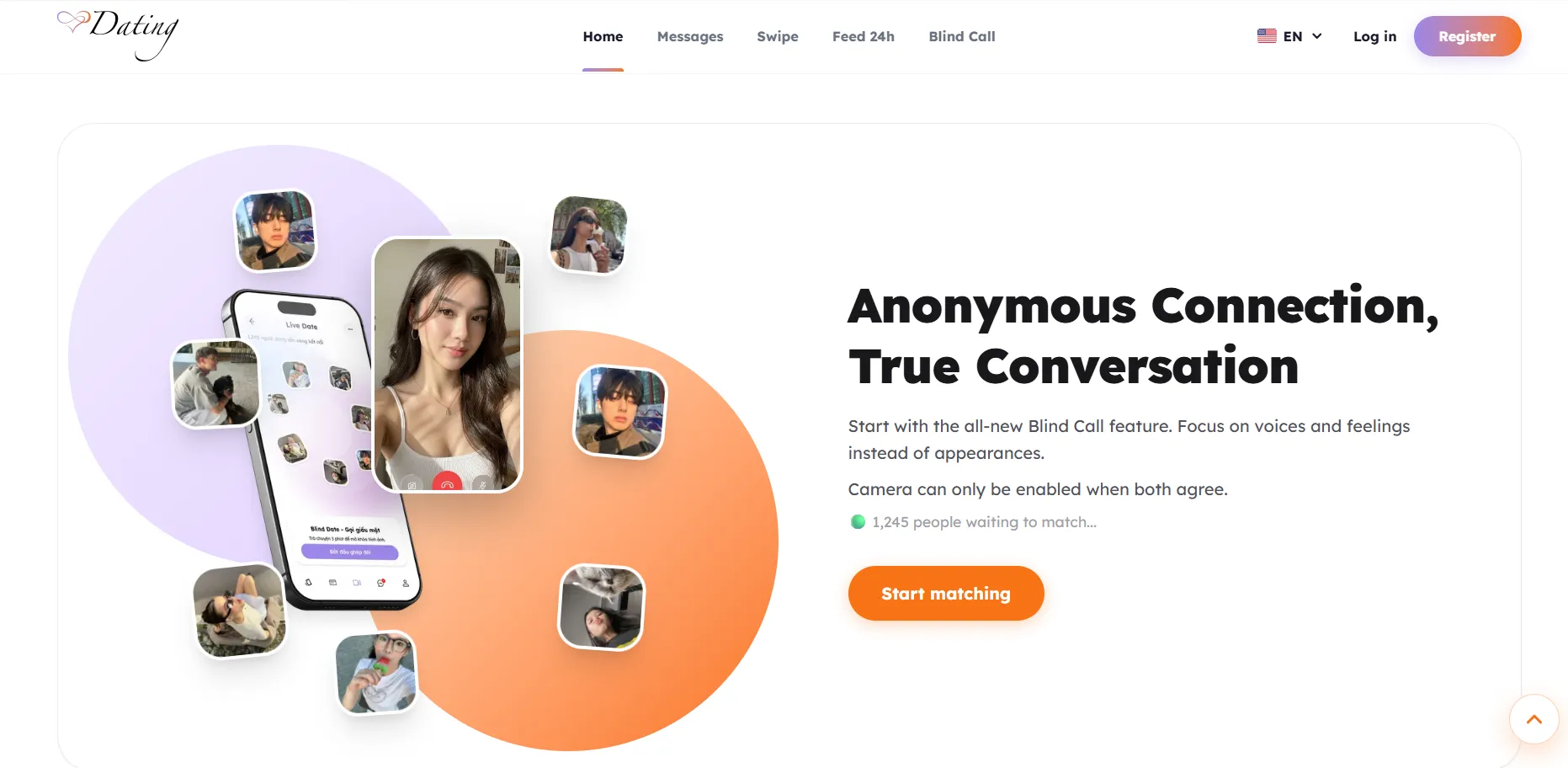
Moving away from the conventional approach of judging people through a few carefully edited static photos, platforms such as OVDating are introducing highly effective psychological "detox" features. The most notable example is OVDating's Face-Hidden Call mechanism: the system completely turns off the camera, forcing users to communicate through voice based on suggested trending topics such as experiential travel or Indie/Lofi music. Only when the two souls truly resonate through conversation and both press "Like" will their real appearance be revealed. Psychologists believe that face-hidden features like these help completely eliminate initial judgments based on appearance, bringing emotions back to their most genuine state.
In addition, instead of having only a static profile, OVDating's integration of a 24-hour Feed feature, which allows users to post stories and everyday moments, also makes interaction more natural, more like real life than a "love recruitment" process.