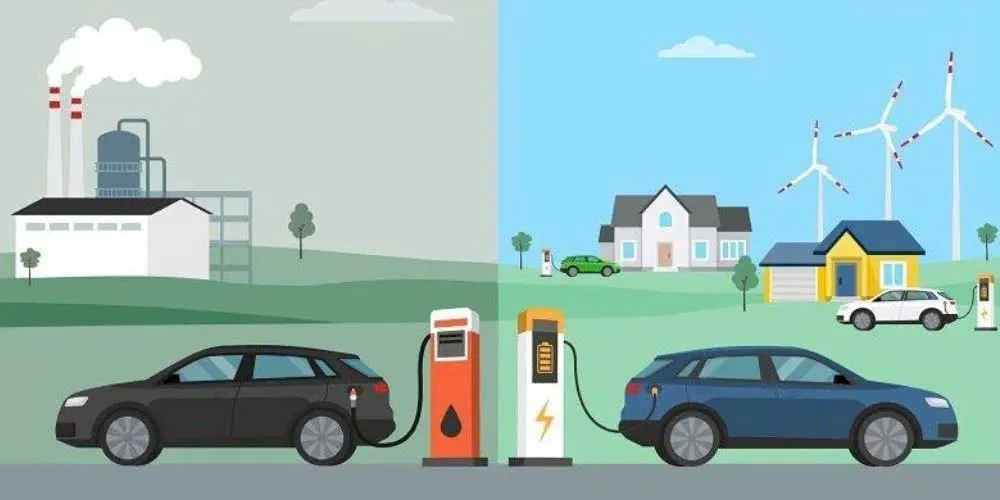

Amidst the global green transition, electric vehicles (EVs) have emerged as a symbol of modernity, both contributing to environmental protection and promising to optimize operating costs. However, behind the praises of charging being cheaper than pumping gas, does this type of vehicle truly outperform traditional internal combustion engine (ICE) cars across all economic aspects?
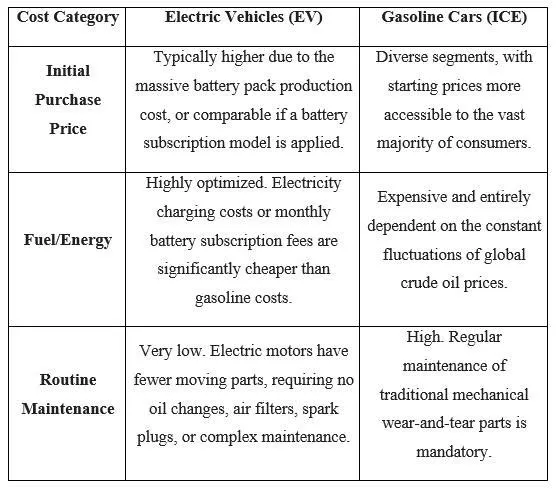
The Cost Balance: Initial Purchase, Operation, and Maintenance
The Carbon Footprint: Cleaner But Not Absolute
Theoretically, electric vehicles produce zero tailpipe emissions at the point of operation, helping to clean up urban air.
Lifecycle Emissions: Although the mining of minerals for batteries generates a large initial carbon footprint, reports by the International Council on Clean Transportation (ICCT) confirm that EVs still reduce greenhouse gas emissions by 60-70% over their lifecycle compared to gasoline cars.
Energy Source: The "greenness" of electric vehicles also depends on whether the charging grid is powered by fossil fuels (coal, gas) or renewable energy (wind, solar).
The Time Paradox: When "Waiting" Erodes Savings
Refueling time is the very "Achilles heel" of electric vehicles. While gasoline cars take only 3-5 minutes to fill the tank and continue a journey of hundreds of kilometers, EVs require anywhere from 30 minutes (at supercharging stations) to 8-10 hours (home charging). The maximum driving range per charge is also typically lower. This downtime is a massive "opportunity cost," especially for those using vehicles for commercial transport services. Furthermore, the risk of rapid depreciation of the Lithium-ion battery pack and the decline in resale value on the used car market are invisible losses that shake the economic viability of EVs.
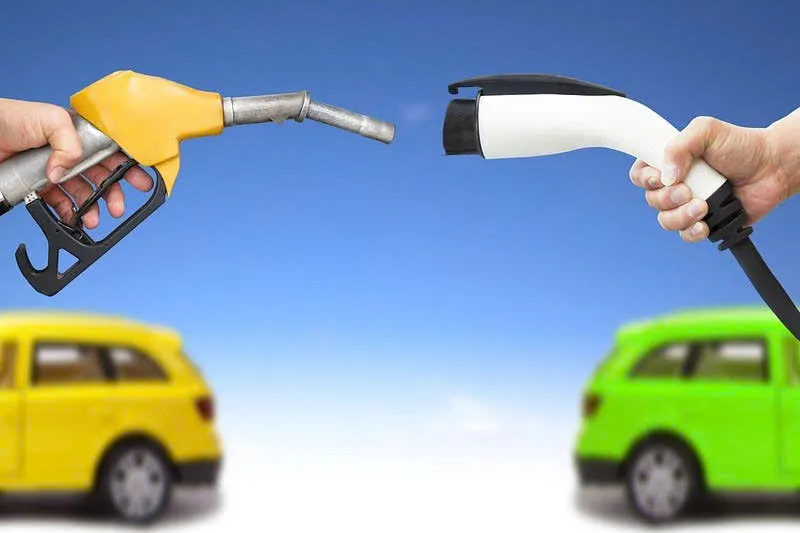
Battery Swapping Stations: A Catalyst to Solve the Waiting Anxiety
To bridge the gap in convenience, a slew of major tech and automotive companies are pushing for rapid battery swapping networks, making recharging EVs as fast as pumping gas:
· VinFast (Vietnam): A pioneer in rolling out battery swapping stations for electric scooters. Customers take just about 1 minute to manually remove and replace a fresh battery, quickly pay via QR code scanning, completely eliminating the fear of battery degradation.
· NIO (China): The EV maker NIO operates thousands of automated, robotic battery swapping stations. In exactly 3 minutes, a depleted car is lifted, fitted with a brand-new battery pack, and ready to roll.
· Ample (US): Developing flexible, modular battery swapping stations capable of serving various vehicle models to relieve the pressure on the charging grid network.