
Uncategorized
The world in 2025-2026: A spiral of violence, geopolitical tensions, and fractures in the global order
As the bells rang to welcome 2026, the world did not enter a phase of "recovery" following the pandemic or past economic crises. Instead, it seems to be venturing deeper into an era of systemic instability
As the bells rang to welcome 2026, the world did not enter a phase of "recovery" following the pandemic or past economic crises. Instead, it seems to be venturing deeper into an era of systemic instability.
From the frozen trenches of Eastern Europe to the sweltering waters of the Taiwan Strait, and from the humanitarian collapse in Sudan to the closed-door meeting rooms of NATO, the global geopolitical landscape is being dominated by two keywords: Conflict and reshaping.
From the frozen trenches of Eastern Europe to the sweltering waters of the Taiwan Strait, and from the humanitarian collapse in Sudan to the closed-door meeting rooms of NATO, the global geopolitical landscape is being dominated by two keywords: Conflict and reshaping.
When diplomacy fails before the barrel of a gun
The year 2025 closed with a haunting and tragic statistic: more than 240,000 people were killed in armed conflicts globally, according to data from The Washington Post. This figure is not merely a lifeless statistic, but the clearest evidence of the paralysis and failure of international peacekeeping mechanisms, particularly the UN Security Council.
In Ukraine, the war has entered its fourth year, defined by a grueling nature of attrition. Both Moscow and Kyiv are caught in an endurance race regarding manpower and military hardware, where military aid packages continue to flow, yet the diplomatic "bottleneck" remains completely gridlocked.
In Ukraine, the war has entered its fourth year, defined by a grueling nature of attrition. Both Moscow and Kyiv are caught in an endurance race regarding manpower and military hardware, where military aid packages continue to flow, yet the diplomatic "bottleneck" remains completely gridlocked.
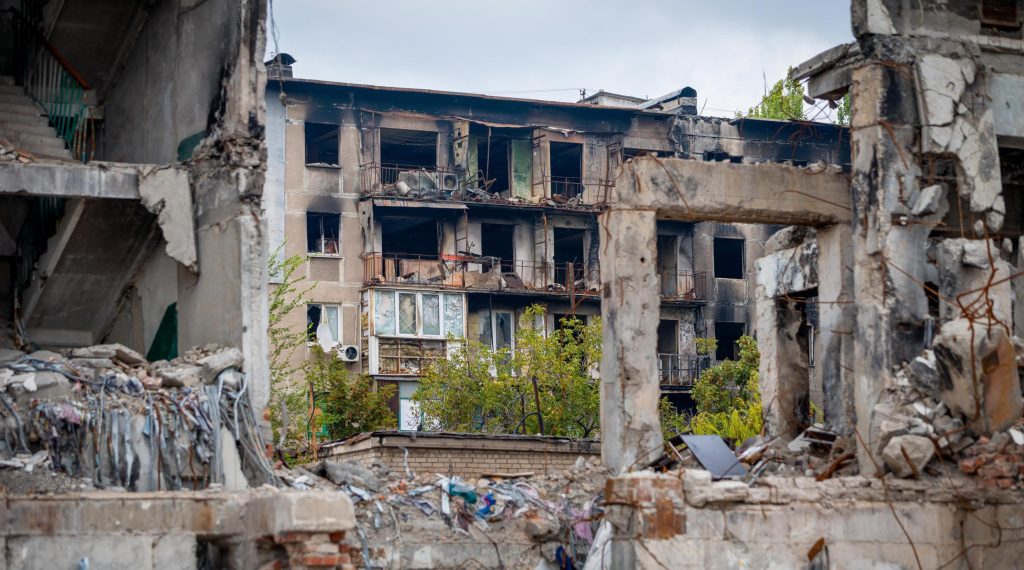
(Devastation in Ukrainian cities. Source: Shutterstock)
Meanwhile, in the Middle East, violence in the Gaza Strip has transcended the definition of conventional military engagement to become a severe humanitarian disaster, threatening global food and energy security through instability in the Red Sea.
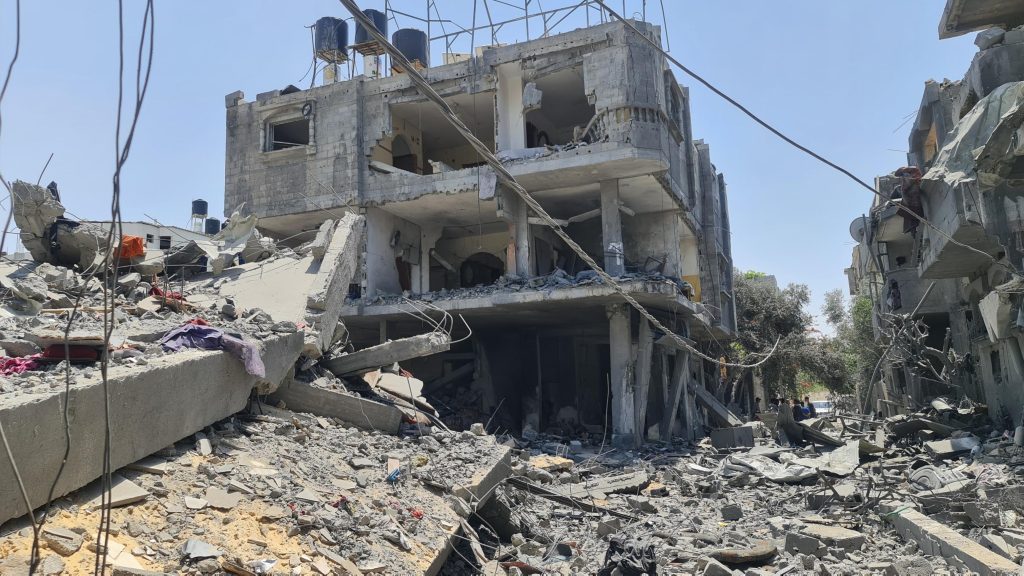
(Ruins in the Gaza Strip. Source: Shutterstock)
Even more alarming is the terrifying silence of the international community regarding "forgotten wars." In Sudan, the Rapid Support Forces (RSF) are accused of committing large-scale acts of violence, leaving thousands of civilians dead without receiving attention commensurate with other geopolitical hotspots.
The nature of these conflicts has shifted; they are no longer simply civil wars or bilateral disputes but have mutated into proxy wars, where major powers test weapons and vie for influence, pushing inflation and energy prices in 2026 into a precarious position.
The nature of these conflicts has shifted; they are no longer simply civil wars or bilateral disputes but have mutated into proxy wars, where major powers test weapons and vie for influence, pushing inflation and energy prices in 2026 into a precarious position.
The Taiwan strait: A "powder keg" and strategic encirclement
In the final days of 2025, the world's focus shifted to East Asia as tensions in the Taiwan Strait reached a new threshold of danger.
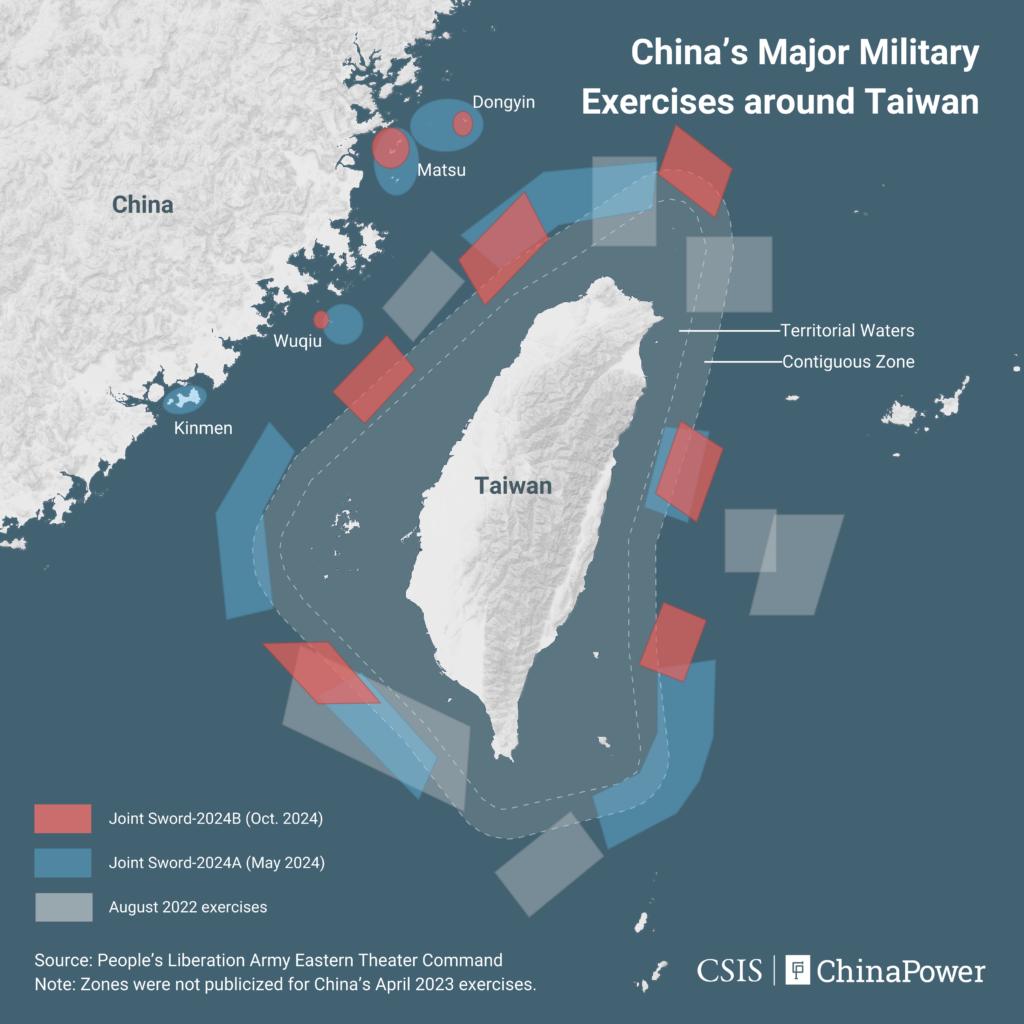
According to The Sun and The Guardian, the People's Liberation Army (PLA) of China launched a large-scale military exercise titled "Justice Mission 2025." Unlike previous drills, the scale of mobilization, involving dozens of warships and hundreds of aircraft executing scenarios to blockade sea and air routes, demonstrates an increasingly perfected strategy of encircling the island.
President Xi Jinping's hardline message on New Year's Eve regarding the goal of "reunification" as a historical inevitability further increased pressure on the island, forcing Taiwan's armed forces into a state of highest alert.
According to The Sun and The Guardian, the People's Liberation Army (PLA) of China launched a large-scale military exercise titled "Justice Mission 2025." Unlike previous drills, the scale of mobilization, involving dozens of warships and hundreds of aircraft executing scenarios to blockade sea and air routes, demonstrates an increasingly perfected strategy of encircling the island.
President Xi Jinping's hardline message on New Year's Eve regarding the goal of "reunification" as a historical inevitability further increased pressure on the island, forcing Taiwan's armed forces into a state of highest alert.
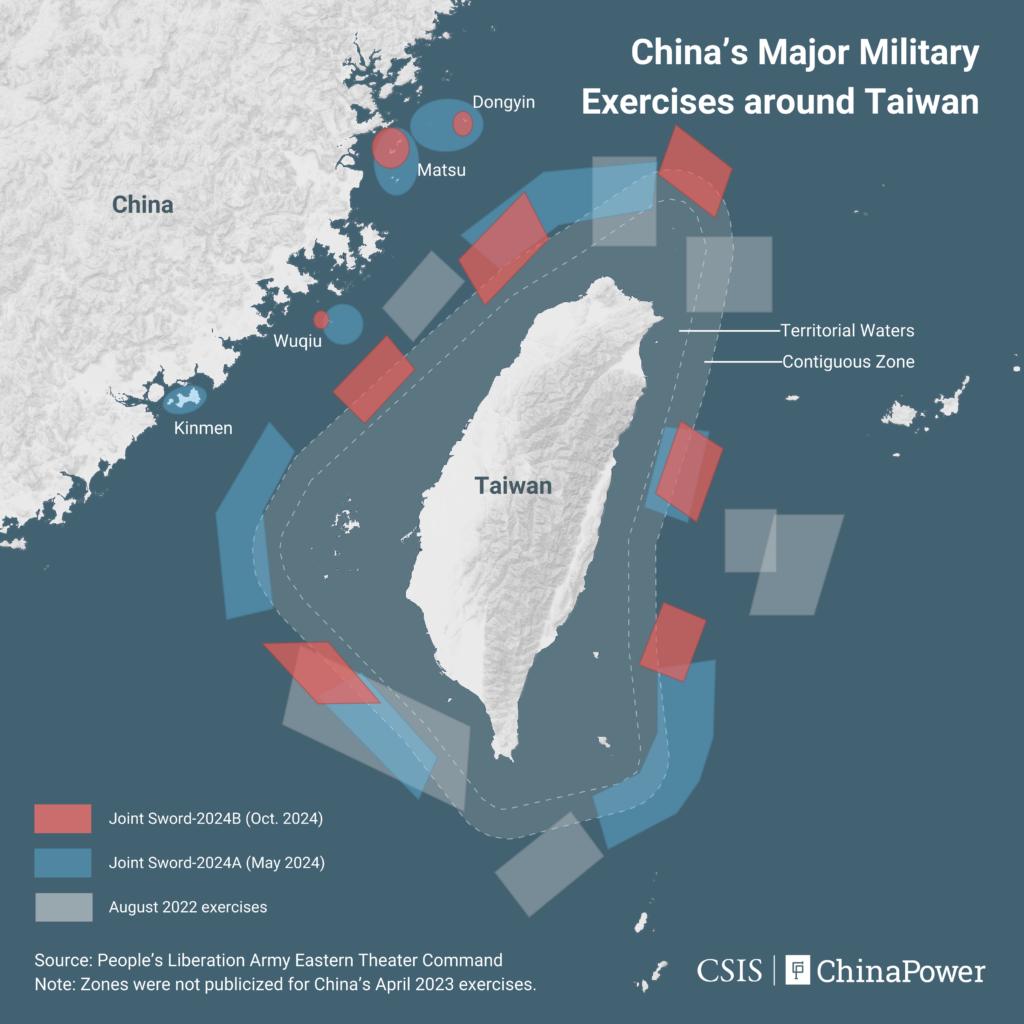
(Large-scale military exercises by the People's Liberation Army (PLA) around the island of Taiwan)
However, this event is not merely a matter of territorial sovereignty, but a battle for survival to control technology and superpower status. Taiwan holds the "Silicon Shield" through TSMC, where the majority of the world's most advanced semiconductor chips are produced.
Any disruption here would cause a domino collapse of the global technology economy, from smartphones to artificial intelligence (AI). This is also the most direct and harsh test of Washington's security commitment to the Indo-Pacific.
If the U.S. does not respond strongly enough, the trust of regional allies such as Japan, South Korea, or the Philippines will be severely shaken, leading to a shift in the regional security architecture.
Any disruption here would cause a domino collapse of the global technology economy, from smartphones to artificial intelligence (AI). This is also the most direct and harsh test of Washington's security commitment to the Indo-Pacific.
If the U.S. does not respond strongly enough, the trust of regional allies such as Japan, South Korea, or the Philippines will be severely shaken, leading to a shift in the regional security architecture.
The East-West decoupling and the fracturing of multilateralism
2025 also witnessed a stark contrast between two major summits, reflecting the deep polarization of the modern world order.
In Johannesburg (South Africa), the G20 Summit focused strongly for the first time on the voices of developing nations. The agenda on sustainable development and financial equity is a sign that this bloc is demanding a greater status, separate from traditional Western dominance.
Conversely, in The Hague (Netherlands), the NATO Summit focused on fortifying the "Western Fortress" by increasing defense spending and collective security.
This opposition shows that international forums are losing their inclusivity and becoming fragmented. While the G20 strives to address "soft" issues like the economy and climate, NATO is militarizing "hard" issues.
The absence of substantive dialogue between these two blocs signals a challenging 2026 for global diplomacy, as the world divides into factions with conflicting priorities.
In Johannesburg (South Africa), the G20 Summit focused strongly for the first time on the voices of developing nations. The agenda on sustainable development and financial equity is a sign that this bloc is demanding a greater status, separate from traditional Western dominance.
Conversely, in The Hague (Netherlands), the NATO Summit focused on fortifying the "Western Fortress" by increasing defense spending and collective security.
This opposition shows that international forums are losing their inclusivity and becoming fragmented. While the G20 strives to address "soft" issues like the economy and climate, NATO is militarizing "hard" issues.
The absence of substantive dialogue between these two blocs signals a challenging 2026 for global diplomacy, as the world divides into factions with conflicting priorities.
The "ticking time bomb" of social movements and regional security
It is not only border wars that threaten stability; internal unrest is also tearing at the social fabric of many nations, creating an intimate link between economy and security.
In Iran, skyrocketing inflation and dissatisfaction with state management have ignited widespread protests in Tehran. Similarly, in North Africa (Togo and Morocco), Generation Z is taking to the streets to protest unemployment.
The common thread in these movements is the breakdown of the social contract: when governments fail to ensure basic livelihoods, their legitimacy is shaken.
Particularly in countries with young demographics, unemployment has transformed from an economic issue into a national security challenge, harboring the risk of coups or institutional collapse in 2026.
In this context, the rise of new regional alliances like the Alliance of Sahel States (AES), comprising Mali, Niger, and Burkina Faso, is a notable development.
With a joint military force of 5,000 troops, the AES marks a turning point in the "decolonization" of security in Africa, turning away from traditional partners like France and the U.S. to seek their own solutions or look toward new partners like Russia.
Although its actual effectiveness remains a major question mark due to financial limitations and the strength of terrorist groups, the birth of the AES confirms the trend of middle and small powers actively reshaping their own destinies rather than relying on the West.
In Iran, skyrocketing inflation and dissatisfaction with state management have ignited widespread protests in Tehran. Similarly, in North Africa (Togo and Morocco), Generation Z is taking to the streets to protest unemployment.
The common thread in these movements is the breakdown of the social contract: when governments fail to ensure basic livelihoods, their legitimacy is shaken.
Particularly in countries with young demographics, unemployment has transformed from an economic issue into a national security challenge, harboring the risk of coups or institutional collapse in 2026.
In this context, the rise of new regional alliances like the Alliance of Sahel States (AES), comprising Mali, Niger, and Burkina Faso, is a notable development.
With a joint military force of 5,000 troops, the AES marks a turning point in the "decolonization" of security in Africa, turning away from traditional partners like France and the U.S. to seek their own solutions or look toward new partners like Russia.
Although its actual effectiveness remains a major question mark due to financial limitations and the strength of terrorist groups, the birth of the AES confirms the trend of middle and small powers actively reshaping their own destinies rather than relying on the West.
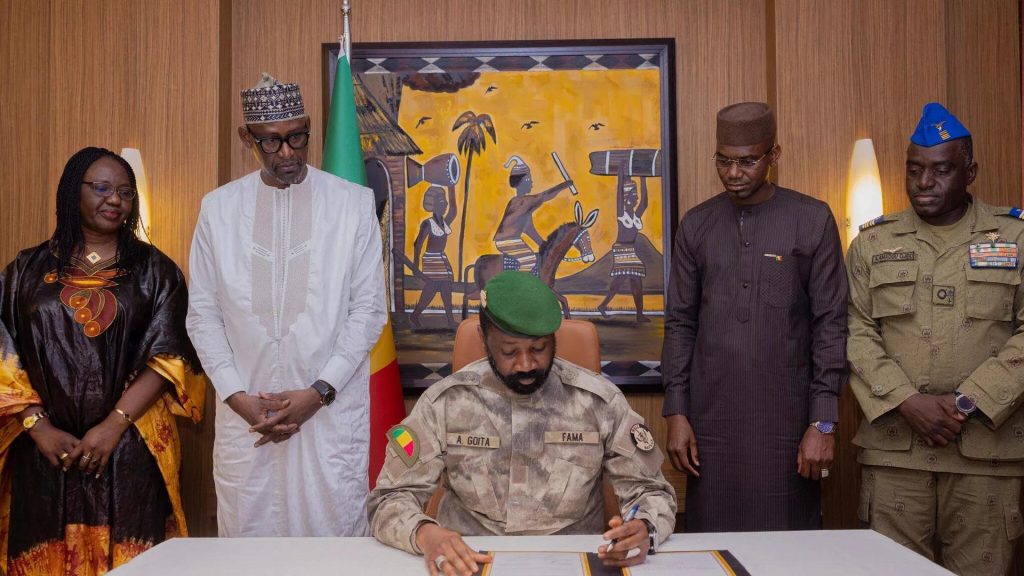
(Military leaders and the shift in security architecture in the Sahel region. Source: Twitter / @GoitaAssimi)
The crossroads of 2026
Looking back at 2025 with its heavy legacy of violence and division, the world stands at a decisive crossroads entering 2026.
An optimistic scenario could occur if economic pressure forces warring parties to the negotiating table, and the voices of developing countries help rebalance the world order.
However, a pessimistic scenario remains present: tensions in Taiwan exploding into direct conflict and proxy wars spreading, pushing the global economy into a deep recession.
Based on current data, uncertainty will be the "new normal," forcing nations to employ maximum diplomatic flexibility to survive amidst the opposing currents of superpowers.
An optimistic scenario could occur if economic pressure forces warring parties to the negotiating table, and the voices of developing countries help rebalance the world order.
However, a pessimistic scenario remains present: tensions in Taiwan exploding into direct conflict and proxy wars spreading, pushing the global economy into a deep recession.
Based on current data, uncertainty will be the "new normal," forcing nations to employ maximum diplomatic flexibility to survive amidst the opposing currents of superpowers.