
Uncategorized
Restructuring human relationships in the age of algorithms and the attention economy
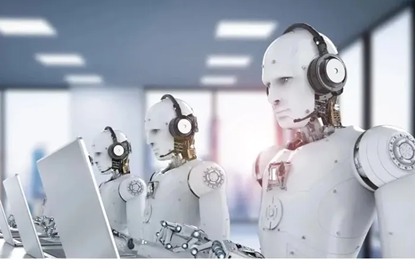
The digital age is witnessing a profound revolution that does not merely stop at changing the way humans communicate, but on a more macro level, it is comprehensively restructuring the very nature of social relationships. Today, human-to-human connection is no longer a purely natural interaction process, but is fiercely governed by content recommendation algorithms, the operation of the attention economy, and value-measuring mechanisms through likes, shares, or views.
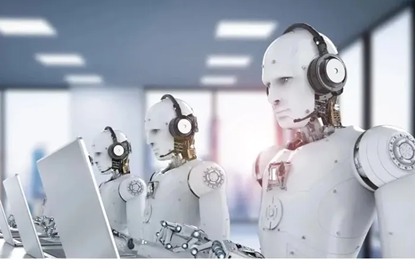
The digital age is witnessing a profound revolution that does not merely stop at changing the way humans communicate, but on a more macro level, it is comprehensively restructuring the very nature of social relationships. Today, human-to-human connection is no longer a purely natural interaction process, but is fiercely governed by content recommendation algorithms, the operation of the attention economy, and value-measuring mechanisms through likes, shares, or views.
Faced with this reality, a vital research question is posed: Is technology merely acting as an inanimate intermediary tool, or has it truly become a force shaping the structure of relationships? And more profoundly, are human emotions and connections in the digital age gradually being "commodified"?
To fundamentally explain this variation, we need to examine the issue through three foundational theoretical lenses. First is the theory of the attention economy, where human attention has become an extremely scarce and expensive resource.
Technological platforms are designed with sophisticated psychological mechanisms to maximize user retention time. The inevitable consequence is that real-life relationships are drawn into a fierce vortex of competition to capture attention, causing the quality of being present together to decline.
Next is the network society theory. In this structure, relationships no longer exist in the form of isolated and closed individual connections. Instead, each individual becomes a "node" within a massive information network. A person's social value now relies heavily on their connectivity and the degree to which their messages spread within that network.
Finally, it is impossible not to mention the theory of digital identity. In cyberspace, people tend to self-construct a "curated version" of themselves. Hidden corners are concealed, making way for meticulously polished images and messages. The disparity between one's online identity and their actual self sometimes creates underlying fractures in how we understand and trust one another.
One of the clearest consequences of this era is the algorithmization of relationships. Invisible lines of code are silently making decisions on our behalf: who we will see, who will see us, and what content deserves display priority. Relationships thus lose their natural randomness and are coordinated by the system. This gives rise to the "filter bubble" phenomenon, where individuals are confined within ecological circles of like-minded people. Social polarization increases, and the space for empathy towards differences is increasingly narrowed.
Parallel to algorithmic intervention is the process of commodifying emotions and intimacy. Likes, comments, and shares have naturally become the new currency for measuring social value and connection. The boundary between private space and the public stage is blurred as personal feelings, family photos, or moments of vulnerability are "publicized" in exchange for interaction. This shift from "private relationships" to "performative relationships" forces us to ask: When the most sacred emotions are packaged into content to attract attention, do they still retain their original purity?
Furthermore, modern relationships are undergoing unprecedented fragmentation and acceleration. Communication has become brief, fleeting, and dispersed across countless different channels. The rise of "micro-interactions" such as dropping hearts or emojis is exploding the number of weak ties, while simultaneously eroding the depth of strong bonds. From this, a heartbreaking paradox of the digital age emerges: people possess thousands of connections yet drown in a profound sense of loneliness. Constantly witnessing and comparing oneself to the "perfect pictures of life" of others has created heavy psychological pressure, along with the fear of missing out relentlessly gnawing away at inner peace.
This restructuring creeps into every corner of social life. In family relationships, the image of members "sharing the same space but living in different worlds" through phone screens has become familiar. Direct dialogue is gradually giving way to indirect interactions, creating a generation gap right at the dinner table.
Regarding romantic relationships, app-based dating culture has opened up countless choices, but paradoxically, it has diminished commitment. Love is sometimes reduced to mere swipes, leading to the prevalence of toxic psychological phenomena such as abruptly cutting off contact or aimless flirting.
In the realm of friendship, online networks bring diversity but also make relationships loose and easily replaceable. Friendship is sometimes weighed on the scale of public interactions, where the lack of a birthday wish on a timeline can be seen as a fracture. Conversely, in professional relationships, digital networking platforms open up unprecedented opportunities. Personal branding is no longer the exclusive privilege of businesses but has become a determining factor for the status, prestige, and survival chances of each individual in the modern economy.
However, from a critical perspective, it would be one-sided to place all the blame on technology. In essence, technology acts as a mirror reflecting the very needs, aspirations, and deep-seated insecurities of human society. Users still hold the power of self-determination regarding how they use and the extent to which they depend on digital platforms. Online relationships, if properly oriented, do not destroy but rather supplement and strengthen real-life relationships, creating a "hybrid relationship" model. Especially for vulnerable groups, online communities act as a life preserver, providing empathy and support that they might struggle to find in the physical world.
Looking toward the future, the picture of human relationships will continue to transform in complex ways. The profound involvement of Artificial Intelligence (AI) in the role of virtual companions, or the development of Virtual Reality/Augmented Reality (VR/AR) with its ability to redefine physical intimate experiences, will be challenging research horizons. Along with that, data ethics, privacy, and the long-term psychological impacts on generations of children born and raised entirely in a digital environment are issues that need to be thoroughly dissected by the academic community.
It can be affirmed that the transformations of relationships in the digital age are not merely an expansion in terms of space or communication media. It is a process of comprehensively restructuring social value systems, redefining the boundaries of intimacy, and witnessing a remarkable shift in power from individuals to multinational tech platforms. Facing the era of algorithms and attention, humanity's greatest challenge does not lie in the extreme question of "to use or not to use technology." The core problem we must solve is how to master and control the way technology is molding the essence of human connection, so that digital connectivity does not become an invisible cage, but truly a bridge linking souls.
Faced with this reality, a vital research question is posed: Is technology merely acting as an inanimate intermediary tool, or has it truly become a force shaping the structure of relationships? And more profoundly, are human emotions and connections in the digital age gradually being "commodified"?
To fundamentally explain this variation, we need to examine the issue through three foundational theoretical lenses. First is the theory of the attention economy, where human attention has become an extremely scarce and expensive resource.
Technological platforms are designed with sophisticated psychological mechanisms to maximize user retention time. The inevitable consequence is that real-life relationships are drawn into a fierce vortex of competition to capture attention, causing the quality of being present together to decline.
Next is the network society theory. In this structure, relationships no longer exist in the form of isolated and closed individual connections. Instead, each individual becomes a "node" within a massive information network. A person's social value now relies heavily on their connectivity and the degree to which their messages spread within that network.
Finally, it is impossible not to mention the theory of digital identity. In cyberspace, people tend to self-construct a "curated version" of themselves. Hidden corners are concealed, making way for meticulously polished images and messages. The disparity between one's online identity and their actual self sometimes creates underlying fractures in how we understand and trust one another.
One of the clearest consequences of this era is the algorithmization of relationships. Invisible lines of code are silently making decisions on our behalf: who we will see, who will see us, and what content deserves display priority. Relationships thus lose their natural randomness and are coordinated by the system. This gives rise to the "filter bubble" phenomenon, where individuals are confined within ecological circles of like-minded people. Social polarization increases, and the space for empathy towards differences is increasingly narrowed.
Parallel to algorithmic intervention is the process of commodifying emotions and intimacy. Likes, comments, and shares have naturally become the new currency for measuring social value and connection. The boundary between private space and the public stage is blurred as personal feelings, family photos, or moments of vulnerability are "publicized" in exchange for interaction. This shift from "private relationships" to "performative relationships" forces us to ask: When the most sacred emotions are packaged into content to attract attention, do they still retain their original purity?
Furthermore, modern relationships are undergoing unprecedented fragmentation and acceleration. Communication has become brief, fleeting, and dispersed across countless different channels. The rise of "micro-interactions" such as dropping hearts or emojis is exploding the number of weak ties, while simultaneously eroding the depth of strong bonds. From this, a heartbreaking paradox of the digital age emerges: people possess thousands of connections yet drown in a profound sense of loneliness. Constantly witnessing and comparing oneself to the "perfect pictures of life" of others has created heavy psychological pressure, along with the fear of missing out relentlessly gnawing away at inner peace.
This restructuring creeps into every corner of social life. In family relationships, the image of members "sharing the same space but living in different worlds" through phone screens has become familiar. Direct dialogue is gradually giving way to indirect interactions, creating a generation gap right at the dinner table.
Regarding romantic relationships, app-based dating culture has opened up countless choices, but paradoxically, it has diminished commitment. Love is sometimes reduced to mere swipes, leading to the prevalence of toxic psychological phenomena such as abruptly cutting off contact or aimless flirting.
In the realm of friendship, online networks bring diversity but also make relationships loose and easily replaceable. Friendship is sometimes weighed on the scale of public interactions, where the lack of a birthday wish on a timeline can be seen as a fracture. Conversely, in professional relationships, digital networking platforms open up unprecedented opportunities. Personal branding is no longer the exclusive privilege of businesses but has become a determining factor for the status, prestige, and survival chances of each individual in the modern economy.
However, from a critical perspective, it would be one-sided to place all the blame on technology. In essence, technology acts as a mirror reflecting the very needs, aspirations, and deep-seated insecurities of human society. Users still hold the power of self-determination regarding how they use and the extent to which they depend on digital platforms. Online relationships, if properly oriented, do not destroy but rather supplement and strengthen real-life relationships, creating a "hybrid relationship" model. Especially for vulnerable groups, online communities act as a life preserver, providing empathy and support that they might struggle to find in the physical world.
Looking toward the future, the picture of human relationships will continue to transform in complex ways. The profound involvement of Artificial Intelligence (AI) in the role of virtual companions, or the development of Virtual Reality/Augmented Reality (VR/AR) with its ability to redefine physical intimate experiences, will be challenging research horizons. Along with that, data ethics, privacy, and the long-term psychological impacts on generations of children born and raised entirely in a digital environment are issues that need to be thoroughly dissected by the academic community.
It can be affirmed that the transformations of relationships in the digital age are not merely an expansion in terms of space or communication media. It is a process of comprehensively restructuring social value systems, redefining the boundaries of intimacy, and witnessing a remarkable shift in power from individuals to multinational tech platforms. Facing the era of algorithms and attention, humanity's greatest challenge does not lie in the extreme question of "to use or not to use technology." The core problem we must solve is how to master and control the way technology is molding the essence of human connection, so that digital connectivity does not become an invisible cage, but truly a bridge linking souls.