
If Northern Vietnamese cuisine is renowned for its refinement and precision, while Central Vietnamese cuisine is bold and profound with layers of spicy flavors, the cuisine of the Mekong Delta captivates people with its openness, simplicity, and creativity.
Blessed by nature with a dense network of rivers and abundant local produce, the people of the Mekong Delta have transformed the most humble ingredients from their homeland into dishes deeply rooted in local identity.
Fermented fish dishes
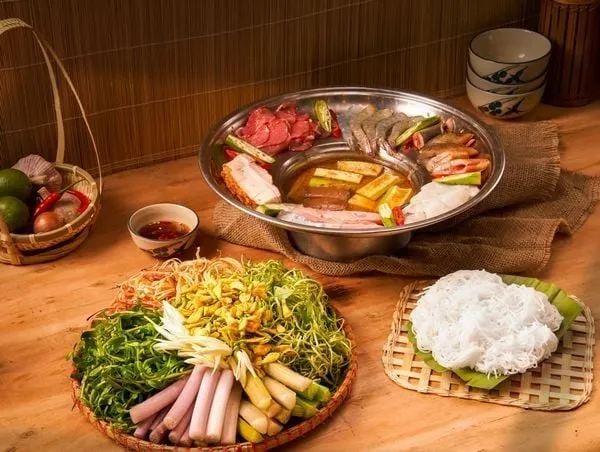
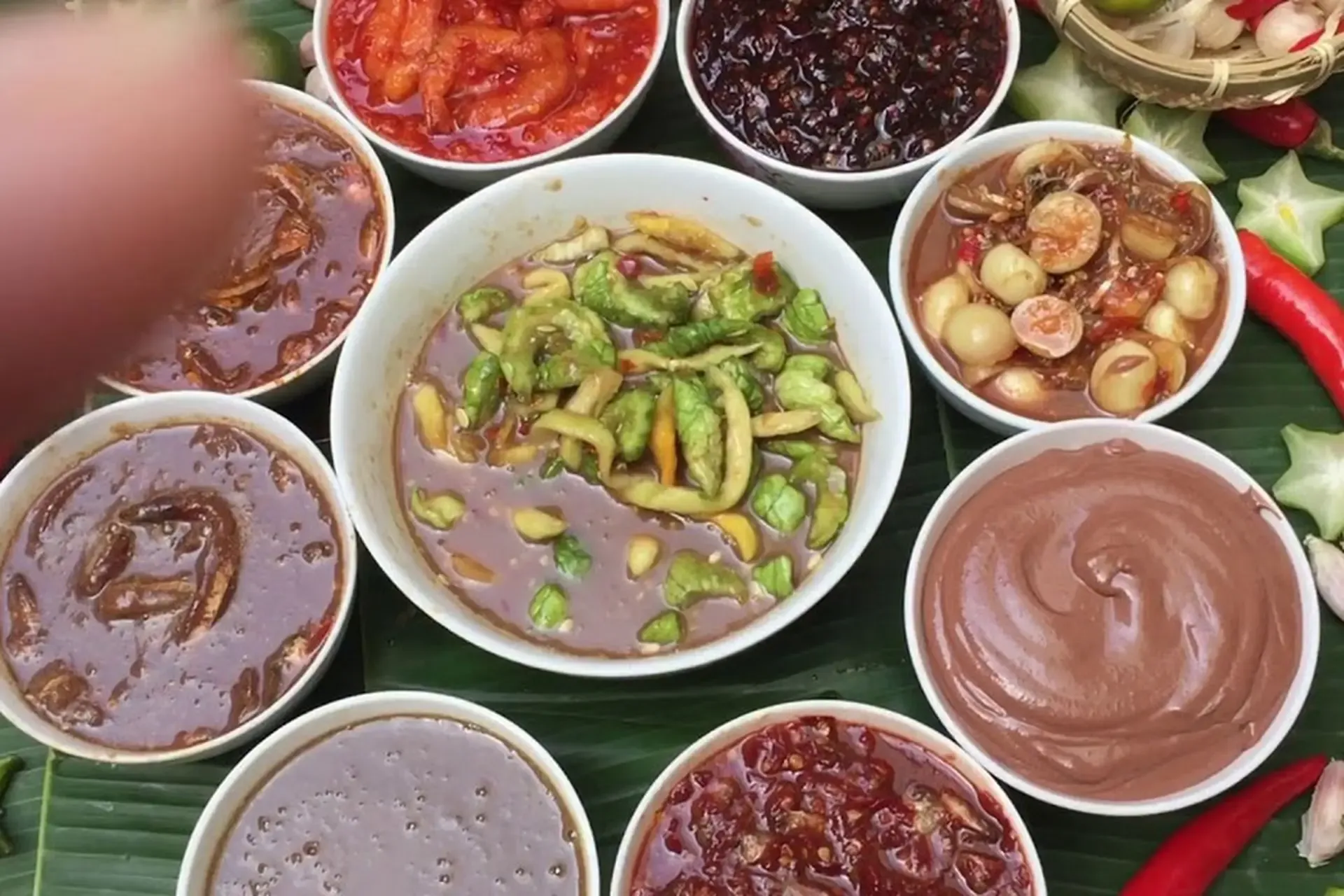
When it comes to Mekong Delta cuisine, the first culinary soul that comes to mind is the collection of dishes made with fermented fish. For people in the Mekong Delta, fermented fish was not merely a method of preserving food used by their ancestors during the early days of land reclamation. It has been elevated into a sophisticated art of flavor. Among these dishes, fermented fish hotpot and fermented fish noodle soup are two of the finest representatives, fully showcasing the harmony of the region's river-based produce.
The broth of an authentic fermented fish hotpot must be simmered with linh fish paste and sac fish paste, specialties of Chau Doc, An Giang, creating a rich sweetness and an intense aroma without being overly pungent. What makes this dish unique is the presence of a diverse “ecosystem” of wild vegetables, ranging from water lilies, water spinach, and banana blossoms to symbolic flowers such as sesbania flowers and hummingbird tree flowers.
When fatty catfish, sweet freshwater shrimp, and various vegetables are dipped into the bubbling hotpot broth, diners can experience a wonderful combination of the salty richness of fermented fish, the sweetness of seafood and freshwater produce, and the refreshing, slightly astringent taste of wild vegetables.
Linh fish and sesbania flowers
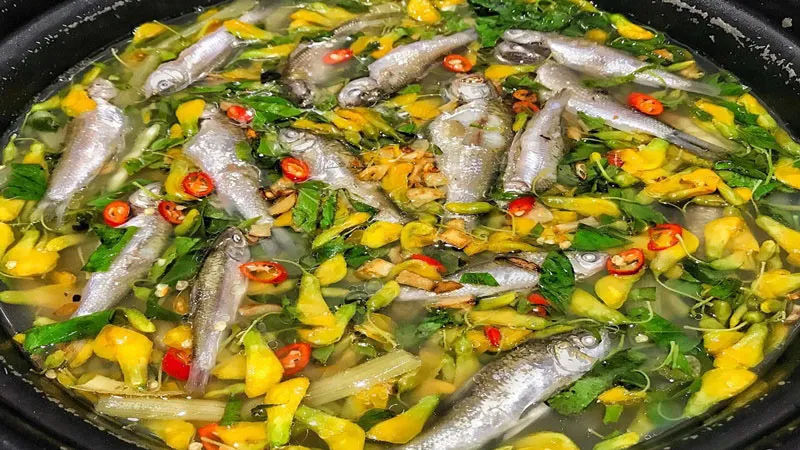
The floating season, which usually lasts from around the seventh to the tenth lunar month each year, not only brings nutrient-rich silt to the fields but also carries a priceless gift: linh fish. At the beginning of the season, linh fish are only about the size of a chopstick tip, with soft bones, sweet flesh, and bellies full of rich, fatty meat. When combined with the vibrant yellow color and slightly bitter yet crisp and sweet taste of sesbania flowers growing along the rivers, linh fish and sesbania flower hotpot is created as if perfectly arranged by nature itself.
The hotpot broth is cooked with fresh coconut water and given a slight sourness from tamarind or bứa vinegar. As soon as the linh fish are added to the gently boiling broth, they must be removed immediately so that the flesh does not fall apart. The simplicity and purity of this dish reflect the seasonal approach to cuisine practiced by the people of this fertile land.
Grilled snakehead fish
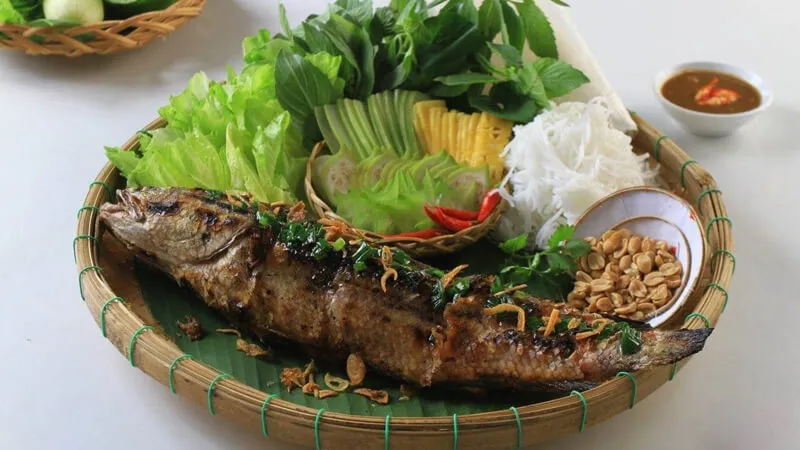
Alongside elaborate broths and hotpots, the cuisine of the Mekong Delta's pioneering settlers is also known for its minimalist cooking methods that achieve maximum flavor, with grilled snakehead fish being a prime example.
This dish requires no scaling, gutting, or seasoning. A freshly caught wild snakehead fish is pierced with a bamboo stick from mouth to tail, planted upside down into the ground, and covered with dry straw before being burned. Once the straw has fully burned down to embers, the blackened ash is brushed away, revealing the pristine white flesh of the fish, releasing an enticing aroma blended with the smoky scent of field straw.
Grilled snakehead fish dipped in chili salt or tamarind fish sauce, then wrapped in rice paper with various garden leaves, creates an extremely rustic and untamed culinary experience.
Coconut heart
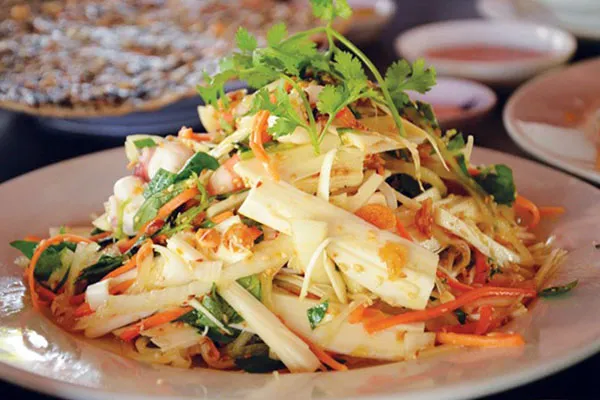
A culinary symbol of frugality, often regarded as a “luxury” dish from Ben Tre, is the coconut heart.
To obtain several kilograms of the tender, white, crisp, and sweet coconut heart hidden deep within the crown of the trunk, farmers sometimes have to cut down an entire mature coconut tree.
After harvesting, the coconut heart is sliced into strips to make shrimp and pork salad or used as a filling for savory crepes made with Muscovy duck and coconut heart. The golden-yellow crepe shell, colored with turmeric and enriched with coconut milk, embraces finely minced duck meat and refreshing, sweet coconut heart, creating a crisp and delicate symphony of flavors in the mouth.
Duck cooked with fermented tofu
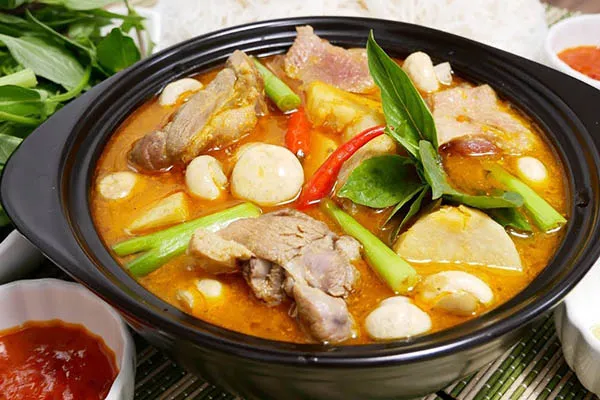
Mekong Delta cuisine is not limited to purely Vietnamese dishes. It is also the result of profound cultural exchanges among the Kinh, Chinese, and Khmer communities that have lived together in this region for generations.
Duck cooked with fermented tofu, a renowned specialty of Can Tho, is a clear example of culinary adaptation from the Chinese community. A lean Muscovy duck with firm meat is carefully marinated with white and red fermented tofu to create a distinctive aroma and an appealing color. When cooked with soft, nutty taro and naturally sweet coconut water, the fermented tofu duck hotpot, served with fresh rice vermicelli and water spinach, offers an unforgettable rich and savory flavor.
Banh tam bi
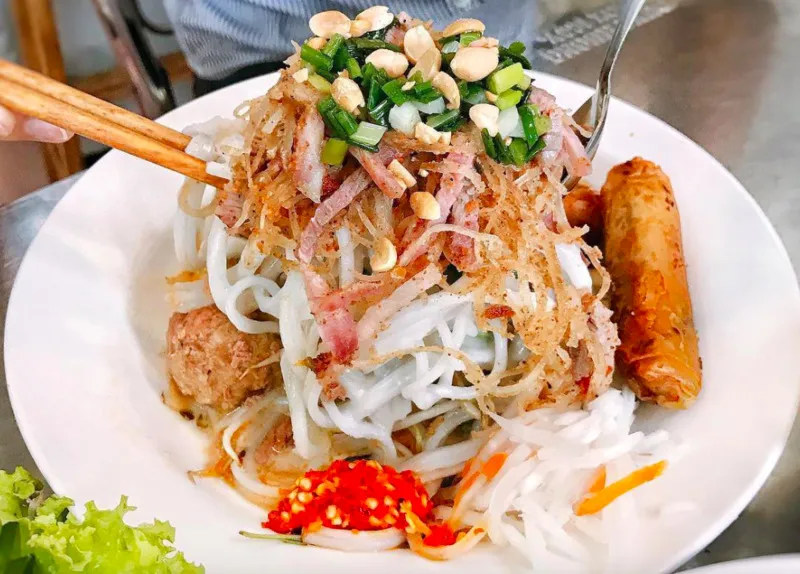
Banh tam bi has a rustic and familiar character, closely associated with the childhood memories of generations of people in Southern Vietnam. The thick noodles are made from rice flour, shaped into large, soft, chewy strands, and served with shredded pork skin mixed with fragrant roasted rice powder, finely sliced braised pork, fresh herbs, and cucumber.
What gives banh tam bi its one-of-a-kind twist is the combination of rich, thick coconut milk with sweet-and-sour fish sauce that is salty and spicy. The seemingly contrasting combination of the sweet richness of coconut milk and the savory intensity of fish sauce creates a harmonious whole that stimulates all of the diner's senses.