

Four-Leaf Clover - A Symbol of Luck and Hope
In life, there are very small things that carry deep, special meanings. The four-leaf clover is one of them. Despite being just a rare variation of the familiar clover plant, the four-leaf clover has long been a symbol of luck, faith, and hope in many cultures around the world.
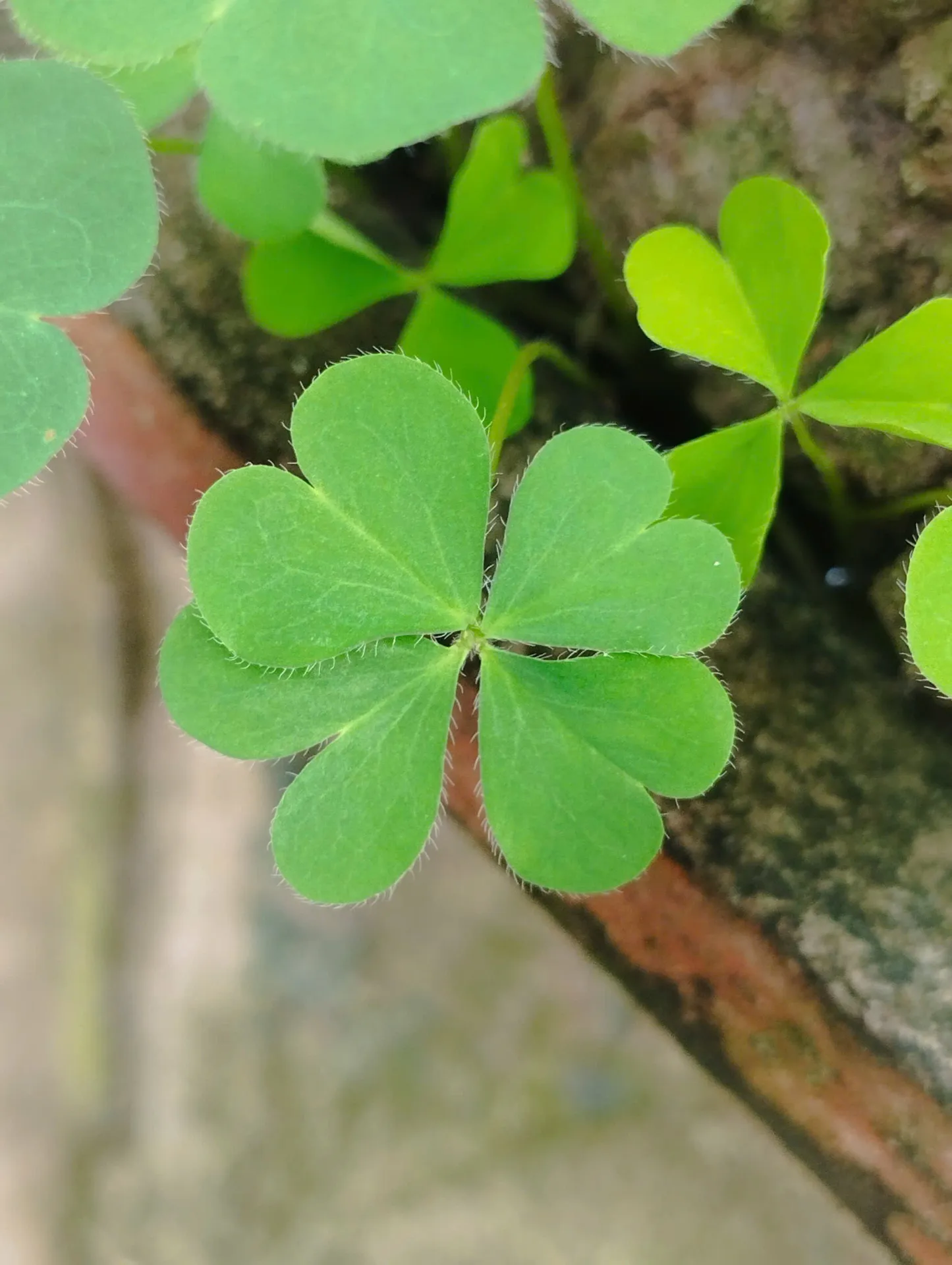
The origin of the four-leaf clover is closely tied to the clover species of the genus Trifolium. Typically, each plant only has three leaflets, but due to natural mutation or a combination of genetic factors, some plants grow a fourth leaf. In 2010, researchers at the National Agriculture and Food Research Organization (NARO, Japan) published a study showing that the occurrence of four-leaf clovers is related to a recessive gene controlling the number of leaflets on the plant. When this gene interacts with suitable environmental conditions, the plant can develop four or more leaves. The occurrence rate of four-leaf clovers is quite rare, estimated at only about one in thousands of clovers. It is this rarity that makes finding a four-leaf clover an exciting experience for many. This is also why the four-leaf clover symbolizes good fortune.
Four-leaf clovers usually grow in natural lawns, parks, fields, or areas with mild climates and adequate humidity. In fact, besides the most common four-leaf form, variations with five, six, or even more leaves have also been recorded. Certain populations of white clover (Trifolium repens) are where four-leaf clovers appear most frequently.
According to folklore, each leaf on a four-leaf clover symbolizes something wonderful: faith, hope, love, and luck. Therefore, many people view finding a four-leaf clover as a sign of positive things to come. While there is no scientific evidence to prove it brings good fortune, the spiritual value this tiny plant provides is undeniable.