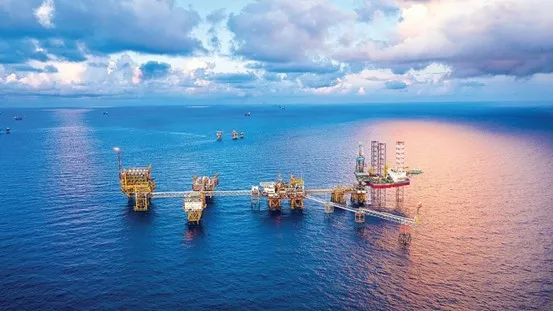

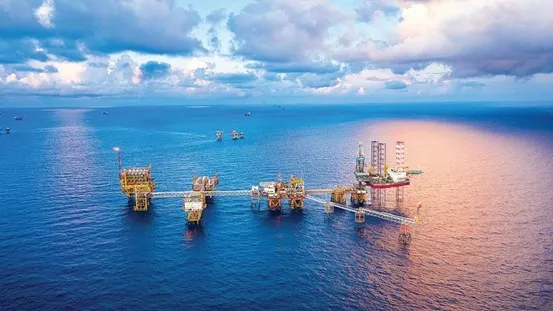
In the current highly volatile geopolitical context, peaceful waters are gradually turning into fierce conflict hotspots, with the Strait of Hormuz at the epicenter. Severe disruption at this vital maritime route is not just a regional incident but a global shock, as it is where approximately 20% of the world's total oil supply transits, according to data from the World Economic Forum (WEF). Hormuz is not simply a narrow strip of water connecting oceans, but has become a strategic "chokepoint," holding the heartbeat of the global economy.
Faced with this harsh reality, a major epochal question arises: Is modern warfare gradually moving away from bloody confrontations for territorial conquest, and shifting towards a new front named the control of "energy bottlenecks"?
Entering 2026, the world witnesses unprecedented escalating tensions as Iran decides to blockade the Strait of Hormuz, a shocking move that leaves the flow of oil through this region almost completely "frozen." According to emergency reports from the International Energy Agency (IEA), the paralysis of this transport route is not only a heavy blow to energy-consuming nations but also a direct challenge to the global security order. Immediately, the US and its Western allies had to step in, increasing both diplomatic and military pressure to force the parties to reopen this maritime route. Threats of direct attacks on energy infrastructure are continuously issued, turning the Gulf region into a giant powder keg just waiting for a small spark to explode into a devastating war.
The consequences of squeezing the Hormuz "chokepoint" immediately trigger a devastating chain reaction on a global scale. According to IEA data, the world's oil supply has dropped abruptly with an estimated deficit of up to about 8 million barrels per day, creating a massive gap that cannot be compensated for in the short term. The scarcity of supply instantly pushes the price of "black gold" to crazy heights, with the New York Post recording moments when crude oil prices soared past the $110/barrel mark, shattering all previous risk forecasts. Not stopping at the energy market, the oil price shock quickly spreads, blowing away all barriers to flood into major financial centers. Stock markets wobble, inflation is driven up, and investor confidence falls into a state of panic in the face of the unpredictable fluctuations of the geopolitical chessboard.
In the aftermath of this energy disaster, Asia emerges as one of the most severely damaged regions. Characterized as the world's factory and an economy deeply dependent on imported energy sources, the stagnation at the Strait of Hormuz is tantamount to having its oxygen supply cut off. From major economies to strongly developing nations, the prospect of depleting oil supplies forces factories to scale back production, logistics costs to skyrocket, and the prices of essential goods to escalate dizzily. The gloomy cloud of a widespread energy crisis is covering the entire continent, threatening to wipe out fragile growth achievements and pushing millions of people into the risk of facing severe economic recession.
From the tense developments in the Gulf, international observers are arriving at a sharp, landmark assessment about the nature of power in the 21st century: Whoever controls the strategic maritime "chokepoints" is essentially holding the key to controlling the entire global economy.
The blockade of a small strait carries a destructive power equivalent to, or even greater than, deploying troops to occupy a vast territory. This proves the rise of a new form of warfare: energy warfare. Unlike traditional conflicts noisy with bombs and bullets, energy warfare takes place more sophisticatedly, more ruthlessly, and yields a geopolitical coercive effect many times higher, because it strikes directly at the life-sustaining bloodstream of all nations.
What is happening at the Middle East's oil epicenter is not merely a regional conflict, but a historic event that is completely redefining the concept of power on the international chessboard. National power is now no longer measured solely by the area of land controlled, the size of the military, or the number of strategic weapons, but is also determined by the ability to dominate and protect transnational energy flows.
When the oil transport route becomes a battlefield, the world is forced to bitterly realize that, in the era of globalization, the economic security of a superpower thousands of miles away can be determined by the clear passage of a narrow strip of water located in the heart of a harsh desert.