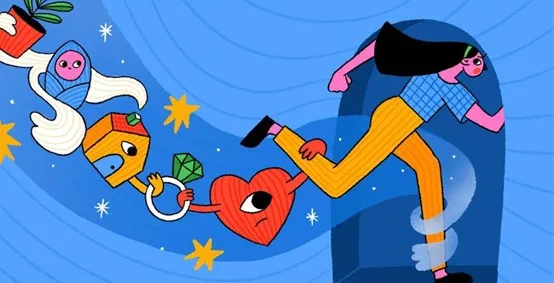

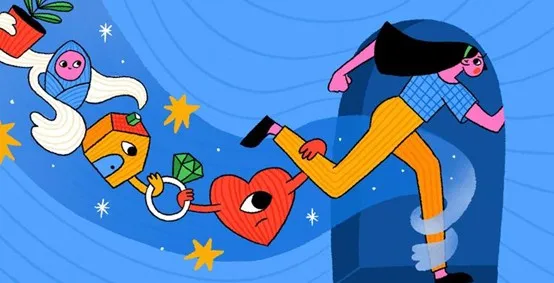
In the multicolored picture of modern love, there is a shade that is increasingly dominating and becoming popular: "undefined relationships". We are living in an era where two people can text each other every morning, share the deepest hidden corners of their souls, exchange caring and affectionate gestures, yet hastily evade when someone accidentally mentions the words "future" or "status". Love seems to no longer be a solid haven, but has become a temporary rest stop, where people hesitate to drop anchor for fear that the rope will tie down their footsteps. Rejecting commitment is no longer an isolated phenomenon, but is gradually becoming a collective psychological syndrome of people who crave warmth but are terrified of attachment.
Deep beneath the shell of freedom and liberality, the core reason making people hesitate to commit is a complex of intertwined fears. First and most intense is the fear of losing personal freedom. For many people, commitment is equated with being trapped; they fear that tying their life to a person will strip away their private space, the ability to make independent decisions, and unfinished personal aspirations. Next is the invisible obsession with "choosing the wrong person." In a constantly moving world, the psychological apprehension that one might meet a more perfect and suitable person in the future makes people afraid to stop and wholeheartedly devote themselves to the present. Finally, commitment always goes hand in hand with the weight of responsibility, responsibility for emotions, finances, and the hurts they might unintentionally cause each other. When the pressure of adult life is already suffocating enough, shouldering the additional responsibility for another person's life and joy suddenly becomes a risky prospect that not everyone is willing to gamble on.
Those psychological barriers are further reinforced and magnified by modern love culture itself, aided by technology. We are entering the era of "love supermarkets," where dating apps lay out millions of choices with just a few swipes and taps. This quantitative excess has created an illusion of infinity: if the current person has a few minor flaws or unresolved disagreements, we easily believe that out there, countless better versions are still waiting. This very paradox of choice has drained human patience. Instead of sitting down to converse and heal the cracks, people choose to withdraw to seek a newer and easier beginning. The inevitable consequence is that relationships forever linger on the surface, sparkling with initial attraction but never reaching the deep layer of empathy and sacrifice.
Faced with this floating reality, a practical question is posed: Is commitment still truly necessary, or has it become an obsolete concept? The truth is, the freedom to evade commitment only brings a false sense of security. A love lacking commitment is like a house without a foundation; it might be brilliant and romantic on sunny days, but will collapse immediately when the storm arrives. Commitment is not a contract that strips away freedom, but a brave and mature choice. It is the safest launchpad for both individuals to comfortably reveal their weakest, most naked hidden corners without constantly worrying about being judged or abandoned.
As society becomes more volatile and flooded with superficial choices, a solid commitment becomes an even more precious anchor, keeping the human soul from drifting and being lonely amidst the vast sea of people. Ultimately, the destination of a true love is not the journey of searching for a perfect individual, but the moment we decide to stop, patiently cultivate, and choose to love a person completely, even in the darkest and most flawed days.