
The U.S. Food and Drug Administration (FDA) specifies 7 fish species with high mercury content.
Fish, shrimp, squid, oysters, and other seafood have long been considered nutritious foods, beneficial for health, and frequently recommended by the U.S. Food and Drug Administration (FDA) in a healthy diet. However, accompanying the nutritional benefits, the consumption of fish and seafood also harbors potential health risks, specifically the risk of heavy metal exposure such as mercury exceeding safe thresholds. This has been a particular concern for the FDA for many years.
As early as October 2021, the FDA coordinated with the U.S. Environmental Protection Agency (EPA) to publish new recommendations regarding fish and seafood consumption. Accordingly, children aged 1 to 11, along with those who are pregnant, planning to become pregnant, or breastfeeding, are advised to prioritize fish with low mercury levels and strictly adhere to the suggested serving sizes. The FDA also simultaneously published a list of 7 fish species with high mercury content that should be avoided.

By October 2022, the FDA continued to launch an independent study on the link between seafood consumption in pregnant women and children and the child’s growth and development. This research report was completed and published in May of this year.
The reason the FDA places special emphasis on the group of pregnant women, breastfeeding mothers, and young children is that seafood plays a very important role in the development of the fetus and children. Nutrients from fish help support the development of the brain, spinal cord, and immune system during the fetal stage as well as the breastfeeding period. However, seafood is also the most common source of mercury exposure in the diet. Mercury, specifically the methylmercury form, can cause damage to the nervous system and have more serious effects on fetuses and young children. Additionally, seafood can be a source of exposure to other pollutants, so selecting suitable fish types and controlling portion sizes is extremely necessary.
The FDA classifies fish and seafood into three groups based on mercury content. The first group is “Best Choices,” the second is “Good Choices,” and the last group is “Choices to Avoid.”
In particular, the FDA specifically identifies 7 fish species with high mercury content, including king mackerel, marlin, orange roughy (also known as “long-lived fish” in some contexts), shark, swordfish, tilefish (from the Gulf of Mexico), and bigeye tuna. These species are classified in the group to avoid, being particularly unsuitable for pregnant women and children.
In the “Good Choices” group, species such as bluefish, buffalofish, carp, grouper, halibut, albacore and yellowfin tuna, Spanish mackerel, Atlantic striped bass, and some other sea fish can be mentioned.
The “Best Choices” group is specifically encouraged by the FDA for women who are pregnant, preparing to be pregnant, and breastfeeding because of low mercury content, helping to limit the risk of heavy metals passing to the fetus or through breast milk. This group includes anchovy, Atlantic mackerel, cod, salmon, herring, sardine, flounder, black sea bass, snapper, shrimp, squid, scallop, oyster, crab, lobster, and many others, with over 30 options, which can be fresh, frozen, or canned.
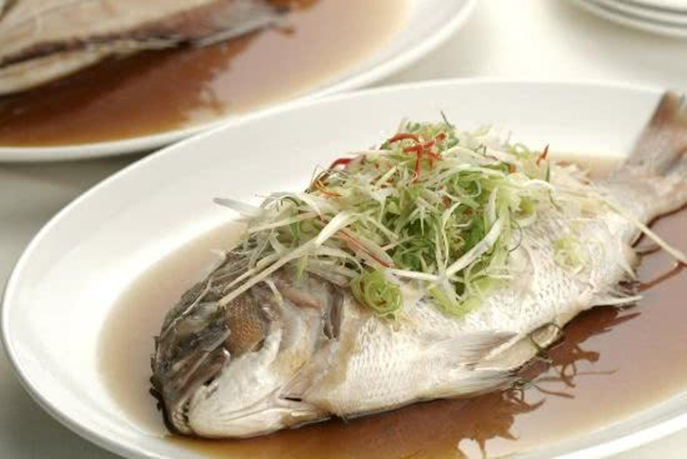
Nutritionally, fish provides many benefits. It is a source of high-quality protein, rich in polyunsaturated fatty acids like omega-3 and omega-6, combined with iron, iodine, and choline – essential nutrients for the rapid brain development of young children. Fish also provides selenium, zinc, and many important minerals, along with B-group vitamins like vitamin B12. Fatty fish is also a natural source of vitamin A and vitamin D, contributing to strengthening immunity and supporting nervous system development.
The FDA states that there is much scientific evidence showing that eating fish as part of a healthy diet helps improve cardiovascular health, reduce the risk of overweight and obesity, and simultaneously reduce the risk of hip fractures as well as colon and rectal cancers.
However, mercury and methylmercury remain a major concern. Mercury exists naturally in the environment and is also released from many human activities. When accumulated in rivers, lakes, and oceans, it can convert into methylmercury and accumulate in fish bodies. If humans are exposed to high levels of methylmercury over a long period, the nervous system and brain can be damaged. According to the EPA, when pregnant women consume seafood containing methylmercury, the fetus can be affected regarding cognitive ability, memory, language, fine motor skills, and spatial orientation abilities.
Almost all fish contain a small amount of methylmercury, but species high in the food chain, especially large predators like shark or swordfish, often accumulate more mercury. The larger the fish and the longer it lives, the higher the amount of heavy metal accumulated in its body. Therefore, prioritizing small fish that eat algae or plankton is considered a safer choice.
Regarding reasonable serving sizes, the FDA recommends that pregnant and breastfeeding women should eat about 113 grams of fish per serving, equivalent to the size of an adult’s palm, with a frequency of 2 to 3 times per week. Children need to adjust portion sizes according to age, from about 28 grams per serving for children aged 1-3 years up to 113 grams per serving for children aged 11 and older. Adults are recommended to eat about 226 grams of fish per serving, twice a week.
To eat fish safely, the FDA notes that one should diversify fish types within the “Best Choices” group instead of eating only one type. It is necessary to remember that mercury exists throughout the fish tissue, so washing or cooking does not reduce the mercury content. Pregnant women and children should avoid eating raw fish like sashimi or sushi due to weaker immune systems and higher susceptibility to foodborne illnesses. Fish is also a common allergen, so if the family has a history of allergies or the child shows abnormal signs, a doctor should be consulted. With fish caught by relatives, especially large fish, attention should be paid to water source quality and pollution risks before eating regularly.
The Epoch Times