
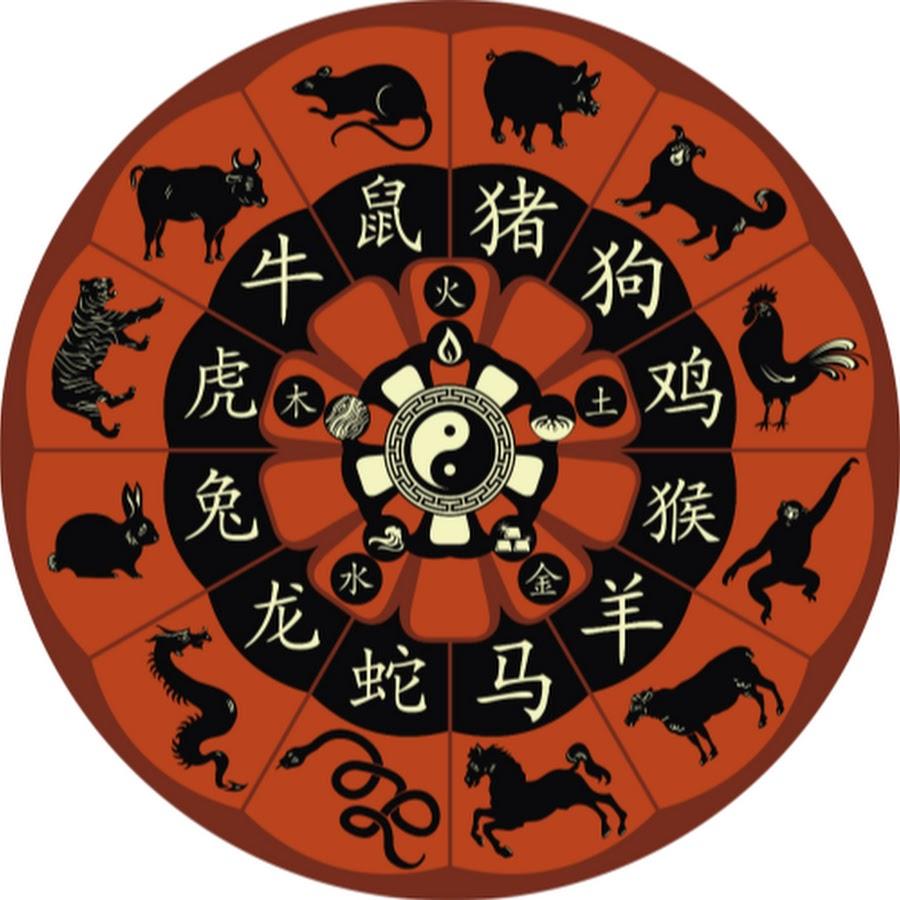
In the context of modern society, where artificial intelligence andspacescience are making unprecedented strides, an intriguing paradox exists inparallel: the endurance of belief in fortune telling and horoscopes. FromEastern cultures that value Feng Shui and metaphysics to the West withits astrology, humanity seems to have never ceased its yearning tounveil
the secrets of the future. Although science and technology have decodedmany natural phenomena, faith in destiny-prediction systems continues toweave its way strongly through life, influencing everything frommillion- dollar business decisions to the romantic concerns of the youth. The question arises: Why, in the era of digitalization, do people still turnto these ancient methods? Is placing faith in natal charts or hexagramsabeautiful aspect of spiritual culture, or is it a superstition that needs tobeeliminated? This study will deeply analyze the nature of fortune telling and horoscopes, dissect the psychosocial factors behind them, andthereby offer an objective assessment of the rationality and limitations of
this belief in the modern world. To gain a thorough understanding, we must first clearly definethefoundational concepts. Fortune telling (Divination), in a broad sense, isthe effort to gain insight into hidden information or predict the futurethrough rituals or supernatural tools. Meanwhile, Tu vi (Purple Star
Astrology) is a specific metaphysical discipline of Eastern culture, particularly in China and Vietnam. Unlike random forms of divinationsuch as casting hexagrams or drawing fortune sticks, Tu vi is built uponacomplex theoretical system, relying on the precise time of birth(hour, day, month, and lunar year) to establish a “natal chart.” This chart isconsidered a coded map of an individual’s life, determined bythearrangement of over 100 stars across 12 celestial palaces.
Regarding origins, Tu vi has a long history of development, believedtohave been perfected during the Song Dynasty (China) by the Taoist ChenTuan. Initially, it played a crucial role in feudal society, used by emperorsand mandarins to select talent or predict national destiny. Throughout
history, Tu vi and other forms of divination spread deep into folklife, evolving to suit the needs of various social classes. This persistent
existence proves that it is not merely a technique for prediction, but asystem of knowledge accumulated through the ancients’ observationof
humans and nature. The intense vitality of fortune telling in the modern world is not
accidental; it is reinforced by profound psychological and social factors. The core cause stems from the human need for control and anxietyreduction. The future is always a variable filled with uncertainty, andthehuman brain is programmed to seek safety and patterns. When standingat
life’s crossroads where reason cannot provide a definitive answer, fortune telling acts as a sedative, filling the void of uncertainty with prophecies, helping the subject feel they hold some degree of control over their
destiny. Another important psychological factor explaining this belief is theBarnum Effect (or Forer Effect). This is a psychological phenomenonwhere people tend to accept vague, general personality descriptions asbeing accurate specifically to them, even though those descriptions couldapply to almost anyone. For example, a statement like “You have a lot of
unused potential but sometimes lack confidence” will make most peoplenod in agreement. Fortune tellers and horoscope systems often employthis effect very skillfully to build initial trust with the seeker.
Beyond individual psychology, the impact of the social and cultural
environment is also incredibly powerful. In Eastern culture, the ideologyof “Spiritual observance brings holiness, abstinence brings luck” has beeningrained in the subconscious over generations. Influence fromfamilyand community creates an invisible pressure, making the selectionof
auspicious dates or checking marital compatibility an almost mandatorysocial ritual. Furthermore, the explosion of media and social networks hasclothed fortune telling in a modern guise. Tarot reading videos on TikTokor zodiac analyses on Facebook have turned divination intoanentertainment trend, easily accessible and spreading rapidly amongtheyouth.
Despite facing conflicting opinions, it cannot be denied that fortunetelling and horoscopes bring certain values, particularly regardingmental
well-being. Supporters argue that this is effective folk psychotherapy. During crises such as unemployment, breakups, or the loss of a lovedone, advice from fortune telling, even if spiritual in nature, can helppeopleregain a mental anchor, soothe pain, and find hope to continue living. When a person believes that bad luck will pass and good times are
coming, they tend to be more optimistic and strive harder, unintentionallycreating a positive “self-fulfilling prophecy.”
Moreover, for many, Tu vi is not just fortune telling but a tool for selfreflection and understanding. The system of stars and palaces inTuvi
describes an individual’s personality, strengths, and weaknesses ingreat
detail. Studying a natal chart gives the viewer a chance to re-evaluatethemselves, thereby adjusting behavior and cultivating moralitytolivebetter. From this perspective, it acts as a form of career counselingor
rudimentary psychological analysis. Additionally, fortune tellingispreserved as a cultural feature, a ritual that helps bond familyor
community members during holidays and major events, provided it stopsat the level of reference and causes no harm. However, through the lens of science and critical thinking, believinginfortune telling and horoscopes contains many loopholes and risks. Thestrongest counter-argument comes from the lack of empirical evidence. To date, no mainstream scientific study has proven a physical linkbetween the positions of distant stars and the personality or fate of aspecific human. The predictions of fortune telling are often unverifiablebecause they are too vague, ambiguous, or based on randomness without
reproducibility, a core standard of science. More dangerously, blind faith in fortune telling can lead to negativeconsequences in mindset and life. Dependence on a fortune teller’s verdict
can cause people to lose their ability to make decisions andthinkindependently. Instead of striving to solve problems through their owncompetence, they blame “fate” or wait for luck, leading to a passiveattitude and fatalism. Even worse, the boundary between spiritual belief
and superstition is very fragile, creating conditions for fraudsters toprofiteer. Many people have lost their fortunes, suffered broken families, or missed timely medical treatment simply because they believedinbaseless prophecies or costly rituals. From the multi-dimensional analysis above, answering the question”Tobelieve or not to believe?” requires a balanced and alert attitude. We needto clearly distinguish between “selective belief” with a mindset of cultural
reference, and “blind belief” leading to superstition. Fortune tellingor Tuvi, after all, are products of the synthetic thinking and experience of theancients; they reflect the worldview of a specific historical era, not
absolute truth or immutable physical laws. The most reasonable approach for modern humans is to use critical
thinking. We can view Tu vi as a channel for entertainment or reflectionon personality, but absolutely should not let it dictate the important decisions of our lives. A mature person needs to understand that a natal chart or a hexagram is merely a reference map; the one steering the wheel and deciding the destination is the individual themselves. “Virtueconquers destiny”, human effort and intellect are always the decisivefactors in changing reality, not the arrangement of the stars. In summary, the existence of fortune telling and horoscopes in modernlife is a complex phenomenon, reflecting the deep human psychological need for safety and self-understanding in an uncertain world. Whilepsychological factors like the Barnum Effect and cultural traditions helpmaintain this belief, the lack of a scientific basis and the risks of superstition are warnings that cannot be ignored.
Therefore, the answer to whether one should believe or not lies intheawareness of each individual. We do not necessarily have to radicallyreject traditional cultural values, but we need to approach themwithacool head and the clear eyes of a new era. Let fortune tellingbeatraveling companion that tells interesting stories about human potential, rather than elevating it to the status of a dictatorial ruler passing judgment
on our lives. Destiny, in the end, lies in the palm of our hands, not inthelines upon them.