
Over the past ten years, Myanmar has undergone a paradoxical journey: from historic hope for a nascent democracy to the abyss of civil war and international isolation. Looking back at the past decade, this Southeast Asian nation is still struggling to find a way out amidst political maneuvering and unceasing gunfire.
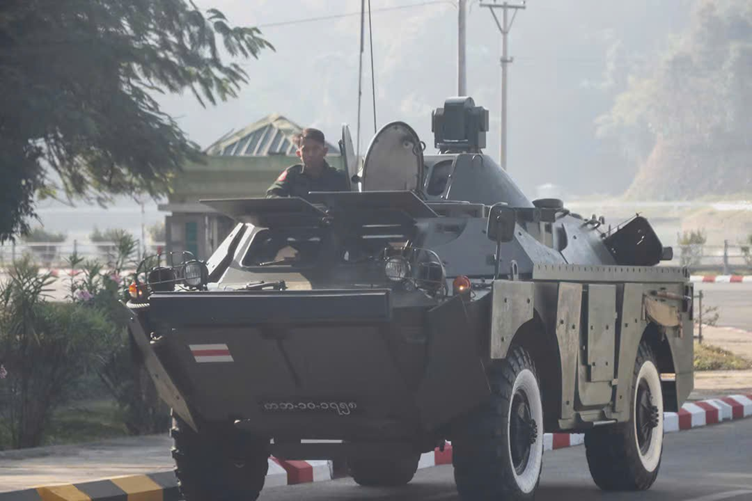
(Myanmar’s military checkpoint is seen on the way to the congress compound in Naypyitaw, Myanmar, February 1, 2021. REUTERS/Stringer)
2015: The short-lived dawn
Rewind a decade, and Myanmar was once a beacon of hope for the international community. The 2015 general election was viewed as a historic milestone when Aung San Suu Kyi’s National League for Democracy (NLD) won a landslide victory.
This event not only marked the end of decades of military rule but also ushered in an era of economic opening. Foreign investors flocked to Yangon, sanctions were lifted, and for the first time, the people of Myanmar dared to dream of a prosperous, free future. However, few suspected that the seeds of instability remained deep within the constitution, where the military still retained core powers.
2021: The historic u-turn and coup
That fragile democratic dream shattered in the early hours of February 1, 2021. Citing allegations of election fraud in the 2020 vote (where the NLD continued to win big), Senior General Min Aung Hlaing launched a coup, detaining Aung San Suu Kyi and senior leaders.
This action immediately plunged Myanmar into chaos. Unlike power transitions in the past, this time, Myanmar’s younger generation, who had tasted freedom and internet connectivity, chose not to remain silent. Peaceful protests spread rapidly, but the military junta’s heavy-handed crackdown forced the resistance movement into a new, more dangerous form: armed struggle.
From protests to widespread civil war
The period from 2021 to 2025 witnessed the powerful rise of the People’s Defense Force (PDF), the armed wing of the exiled National Unity Government (NUG). The unprecedented coalition between this force and long-standing Ethnic Armed Organizations (EAOs) created immense military pressure on the Naypyidaw regime.
The conflict has turned many once-peaceful rural areas into fierce battlefields. An economy once forecast for strong growth has fallen into recession, the Kyat has plummeted, and health and education systems are nearly paralyzed in many regions.
2025: What future for Myanmar?
By the end of 2025, the overall picture of Myanmar remains grim. Although the military junta has repeatedly promised new elections to seek legitimacy, amidst escalating conflict and the absence of genuine political opposition, public and international trust has all but evaporated.
Looking back at the decade, from the hopeful ballots of 2015 to the deeply divided reality of today, the lesson from Myanmar shows that the road to building democratic institutions is never smooth. The country now stands at a crossroads: continue sinking deeper into a prolonged war of attrition, or seek a substantive dialogue solution to heal the nation’s profound wounds.